I read a quote once that went something like: “it’s not hard to make a decision when you know what your values are.” It is not enough to say that you value something. The true test of what you value is in how you spend your time, your money, and your energy. When faced with a difficult choice, we have to weigh what is truly important to us. Sometimes when we haven’t stopped to think about what really matters, to think through our values intentionally, we make choices based on whatever strikes our fancy at the time. While this may not be such a horrible thing every once in a while, we do have to consider that the path we take in life is made up of choices. Sometimes a single choice can drastically alter the course of our lives, for the better or for the worse. Other times, it’s the small, seemingly meaningless choices that add up over time, quietly forming habits that shape our future. Either way, in knowing our values and holding fast to them, we can be intentional about our choices, and in fact, the whole course of our lives.
Jedd and I recently had a head-on confrontation with our values. 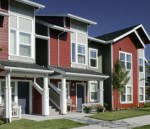 The choice in front of us was that of buying a house. At first, the values that came into play were not only financial (how much of our income and savings we were willing to sacrifice to own a property) but also what kind of environment we’d like to live in. As we often tend to do, we seemed to have opposite views on these subjects only to find out later that deep down, we both wanted the same thing.
We determined that we value being able to host friends, to use our car as little as possible in getting to work, and things like that. We looked at some condos because the more space we have, the more stuff we’ll “need” to fill it. Having more stuff is one of the biggest pressures in our culture that is the hardest to fight, but one of our goals is that we’ll only buy things that we use on a regular basis. Also, Jedd is helping me see that it is often more important to buy quality, durable items than whatever is cheapest in order to save money in the long run and to reduce the amount of needless waste.
Other values of ours that came into the house search were those of community and making a positive impact. We found a great little house in a very unique community, a neighborhood that was once referred to as a “ghetto” and was intentionally restored. The neighborhood includes privately-owned homes as well as rental units to allow for people of different income levels. Various social service agencies, a Boys and Girls Club, and the Home Owner’s Association are present to offer community-building and support to people of diverse backgrounds. The streets are active with children of all ethnicities- many of whom are from refugee families, single-parent households, etc. While there are many difficult things about the neighborhood (mainly noise and safety), it’s a place we were very drawn to. We felt we could be of use in this community, at the least as positive role models. We considered buying the house as an investment in the community itself, more than in the property. Sure, we could find somewhere safer, more private, more elegant, easier to live in- but we realized that’s not really what our values are about.
So you may be wondering why we haven’t bought this house. The conditions were ripe- the economy was in our  favor. Well, we came very close. But it turned out that there was a complication in the closing process that caused us to step back and re-evaluate if we valued the house enough to hang in there. It was another intense moment in our relationship where I was very unsettled and thought Jedd was on a completely different page about the situation. But it wasn’t so. We looked at our values. Yes, we value investing in a community and being somewhere that challenges us to reach out. Yes, we are committed to Portland long-term. Yes, we would prefer for our monthly home payment to be invested into our own house rather than go into a landlord’s pocket. But we’re two young, entrepreneurial people in the midst of life transitions. Who knows what we will be doing in two years? And we still have a lot of traveling and adventuring we want to do. We concluded that although we’d love to be in that house some day, right now we value the “freedom to ch
 ange” even more. Freedom to pick up and volunteer abroad, freedom to spend a short chapter of our lives doing something else, freedom to take an opportunity when it comes at us and not have to worry about being committed to a certain place or a mortgage payment. We’ll sacrifice some rent payments to have those freedoms until we know we’re ready to really dig deep into a neighborhood and not be so mobile.
We will be moving into a rental by the start of November that allows us both to commute without needing to drive. If you’re in the area, we’ll likely have an “apartment warming” soon. A big, heartfelt thanks to the Le’s who have graciously hosted us in their home for several months now! We are blessed by their invaluable generosity and patience during this seemingly endless transition period.


 and we are going to try our best to answer and share as much about it as possible. It’s hard to truly capture everything that we experienced in a blog, but definitely feel its necessary to try (one of us could actually talk forever but thankfully, his better half keeps him grounded, or at least tries to). In these series of posts, we hope to share with you about the people (Tuesday), the land, the amazing services taking place everyday supported by local leaders and the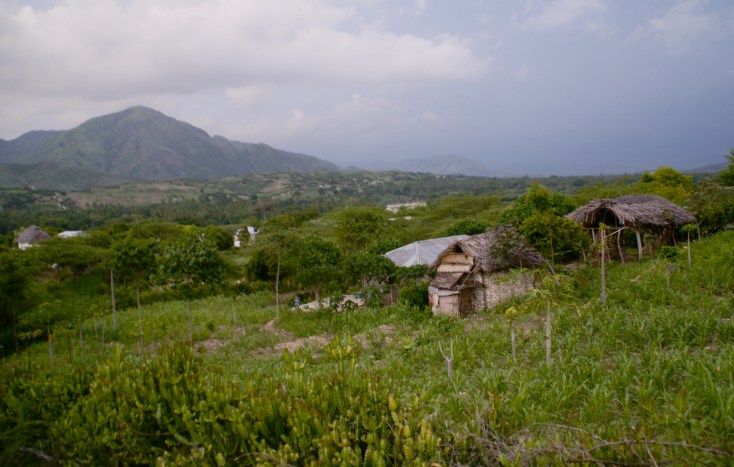




 Simply Intentional