* Life Updates, * Michelle Thoughts, Videos

A 90th Birthday and Family Reunion

We’ve had the unique opportunity in this season to do some extra travelling. We were so lucky to be available to attend my (Michelle’s) grand-mère’s 90th birthday in New Orleans last weekend. It was a whirlwind weekend in more ways than one! Tropical Storm Lee hit right after we arrived, and we stayed only about 48 hours in order to get to our next destination. My grand-mère is a great inspiration to me, and it was neat to see the impact she’s had on the people around her. Plus we got to see all my aunts and uncles again!

From New Orleans we hopped over to Florida where we are spending about two weeks helping Jedd’s “great” aunt, Aunty Alma, pack and clean up for her move across the country. It has been such a privilege to not only meet Aunty Alma for the first time (for me), but to spend time with her (and her friends and neighbors). I feel lucky to get this rare glimpse into a retirement community. We have met fascinating and delightful people who come here from many different places, and they all are a great support for each other. Over all, this trip has been a great experience for us!


* Michelle Thoughts, When Helping Hurts

When Helping Hurts Intro: Caring

As I (Michelle) mentioned in my last post, I’m starting a blog series related to what I’ve been learning lately. A central part of my study has been the book When Helping Hurts: How to Alleviate Poverty Without Hurting the Poor . . . and Yourself, by Corbett and Fikkert, and their online resources at the Chalmers Center. The concepts and quotes in my next posts will primarily come from these sources.

When I was about eleven years old or perhaps younger, I stumbled upon the notion of privilege. I say stumbled because the thoughts that I pieced together at the time seemed to be coming from somewhere other than my own, simple childhood brain- though it was less like stumbling and more like I was deliberately being led down a particular path of thought. Sitting in my room, surrounded by toys, a dresser full of clothes, a house full of nice things, and a beautiful view out my second story window, I realized that all these things had been given to me without even having to ask. Soon, the image of an African girl came to my mind. She was my age and she didn’t have any of the things in my room. She had experienced a childhood altogether different than my own, where safety, health, and basic necessities were never certain because she was born into a different house on another land. I wondered what she thought of me, if she was angry with me. It wasn’t fair, I decided. But other than feel guilty and try to be more grateful, I didn’t know what to do about it.

In high school and college, my understanding of the injustices around the world grew as I learned about historical and current events. I can still remember watching a video about Ghana during a youth group “30 Hour Famine” when I learned that children were forced to kill their own families with axes. Horrific. The sickening image was a wake up call as to the enormity of ugliness, brokenness, and evil in the world. I was so thankful everyone had their eyes closed in prayer as my face had become a mess of hot tears and snot- it was one of the first times I felt so deeply that our world is not as it should be.

The introduction of the book, When Helping Hurts, says:

North American Christians are simply not doing enough. We are the richest people ever to walk the face of the earth. Period. Yet, most of us live as though there is nothing terribly wrong in the world. … We do not necessarily need to feel guilty about our wealth. But we do need to get up every morning with a deep sense that something is terribly wrong with the world and yearn and strive to do something about it. There is simply not enough yearning and striving going on.
I don’t consider myself to be an emotional person but from time to time, I have had experiences similar to the “30 Hour Famine” where I’ve been deeply moved to mourn for what is wrong in our world. Recently I had a break-down after watching Defiance (Jewish brothers in Nazi-occupied Eastern Europe escape into the Belarussian forests in order to protect themselves and about 1,000 other Jews) because it reminded me how inherently messed up and distorted the human condition is, and how desperately we need God. I recall my own shortcomings- how I want to be a better person yet I keep criticizing my husband, I don’t express love and appreciation enough in my relationships, I defend myself instead of taking correction, I take the self-serving path much too often… On a personal level, we all fall short no matter how we try. Our relationships with others are broken as well, evidenced by everything from divorce rates to road rage. Our neighborhoods and cities suffer from crime, inadequate education systems, isolation of the elderly… Our nations are plagued by income inequality, political slander, irresponsible corporations, apathy, war… The lists go on and on. I don’t mean to sound so pessimistic, but I think it’s important to realize the depth of our problems- that we are in over our heads and we can’t get ourselves out. Why? Because then we realize how we desperately need God. He is quite literally our only hope.

I know we are not meant to be in a state of mourning all the time- that would be depressing and, in turn, debilitating. But I think it is far healthier to let the weight of the world hit you profoundly from time to time than to feign ignorance and live as if nothing is wrong. This means allowing yourself to see the ugliness in the world, paying attention to current events and being aware of historical injustices. Look people on the streets in the eye, literally and metaphorically, acknowledging their existence, acknowledging that all is not right. Don’t let yourself become desensitized. When I accompanied a group of college students to Arizona (see video blog here), they asked an immigration lawyer working in Operation Streamline how she copes when her clients are continuously treated so unjustly. Her response was that she doesn’t cope and doesn’t want to. She cries- in court- because she refuses to be desensitized or to go on as if nothing was wrong.

Caring about people and the situations they’re in is the first step. The next step, taking action, goes hand in hand. And when we do take action, we must also desire to act in a way that is not only effective but also avoids any harm.

That leads me to our topic for the series which is to follow. I want to address one more thing before I really get into the concepts of serving others without harming them (or yourself). As you can already tell, I’m coming at this from a faith-based perspective, as does the book “When Helping Hurts.” Faith doesn’t just fit into the picture, it is central to it. More on that next.


Other “When Helping Hurts” series posts:  Intro: God and PovertyContext Is CriticalHung Up On MaterialWhat To Do When, How To Be Positively Helpful (Part 1)How To Be Positively Helpful (Part 2)


* Michelle Thoughts, When Helping Hurts

Are you still paying attention?

http://www.pbs.org/newshour/bb/world/july-dec11/paulfarmer_07-28.html

I made a commitment to myself after the January 2010 earthquake in Haiti that I would never forget about Haiti and that I would stay involved in one way or another. One way I’ve decided to do this, as I mentioned in my “Bucket List: From Now Until Take-off”, is that I am trying to educate myself and practice advocacy during my free time before we go into the Peace Corps. In my research, I recently came across this interview, above, with Paul Farmer (you may know him as subject of the book Mountains Beyond Mountains: The Quest of Dr. Paul Farmer, a Man Who Would Cure the World ) which is a reminder that although the earthquake was over 19 months ago, we still need to pay attention.

As Farmer puts it in the interview: “Haiti has had a lot of difficulties after the quake, political unrest, the cholera epidemic, and then a lack of follow-through from some of the big development agencies and those who made pledges. So, it’s going to — so, as I said in January, it’s going to be a real long haul, a long row to hoe.”

How do you and I stay in it for the long haul? Just because we don’t hear about Haiti from the main-stream media anymore, doesn’t mean the need is gone. We can’t all go and serve in Haiti- even if we could, is that really what is needed? As I’ve been doing my online research and reading lots of books, I’ve developed a desire to share what I’m learning with others- especially Americans who tend to be privileged, like me, as well as a bit unsure about what to do with our privilege in light of the great disparity in our world. There are very important things we can do but I think we are often confused about what they are.

One problem we face in America is apathy. Another problem, however, actually comes from those of us who want to help. I think we don’t necessarily know how best to help. Many of us have gone on short-term “missions” to developing countries- or impoverished areas in the U.S.- and more often than not, we come home feeling that we’ve been changed more than we’ve made change for someone else. There’s something to that… Also, we’re often not aware of all the complexities that impact the community we’re visiting, so we don’t always realize how our projects truly impact people after we leave. Our intentions are great but our actions can end up doing more harm than good. No one wants that. This is the subject I hope to shed some light on.

I don’t claim to be an expert but I’m attempting some “independent study” in relation to this idea of helping without hurting, the situation in Haiti being sort of a case study. I think being an educator in this way (sharing with Americans who want to go serve) could potentially be in my long-term vocational path. I’ve thought about working on Youtube-type videos that are catchy and can easily explain important, yet often misunderstood, concepts (sort of like the Story of Stuff video but for different topics). Another idea would be to develop educational activities and programs that would be used to prepare groups who are going abroad to serve, or used for general consulting purposes with churches and non-profits.

Those are some long-term ideas. For now, my thought is that I’ll do a short blog series on related topics in an effort to practice communicating the concepts I’m learning. I hope you’ll bear with me! Also, I would really, really appreciate your interaction with these upcoming posts. Asking for clarification, sharing your own thoughts, pointing me to other resources, and giving feedback will help me refine my vision for this work. Please share!

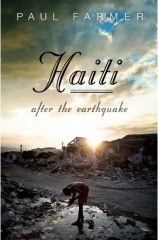
So more on this subject to come… In the meantime, to learn more about the situation in Haiti, I urge you to read Farmer’s new book, Haiti After the Earthquake and consider signing up for updates and “action alerts” from the Institute for Justice and Democracy in Haiti. As I’ll discuss in future posts, having a better understanding of the context of a place and its people is key to being able to serve there effectively.

* Michelle Thoughts, Videos

Family Video

I have been meaning to do something with the video footage I took during the month of July when much (though not nearly all) of my Mom’s side of the family joined us for the 4th. I decided to test out one of the iMovie templates that’s in “movie trailer” style. Here’s the result. Enjoy!

* Michelle Thoughts

What is Church?

Is church just a place to go on Sundays? As Francis Chan would say, did Jesus come and die so that Christians would go somewhere once a week for a service? Thinking about the true meaning of church and getting creative about what it can look like is something we find ourselves doing from time to time. I thought it was worth sharing the following excerpts of a letter written by my (Michelle’s) former pastor at New Community Church in Spokane, who is now the president of a church-planting organization, Christian Associates International:

I see many churches being planted at this time, but many of them are really simply starting worship services.  The reality is, we don’t need more worship services.  Most churches in most cities have plenty of seats available – right?  Read what veteran missionary and theologian  Howard Snyder says about this dilemma:

“The church gets in trouble whenever it thinks it is in the church business rather than the kingdom business. In the church business, people are concerned with church activities, religious behavior in spiritual things. In the kingdom business, people are concerned with kingdom activities, all human behavior and everything God has made, visible and invisible. Kingdom people see human affairs as saturated with scriptural meaning and kingdom significance. Kingdom people seek first the kingdom of God and its justice; church people often put church work above concerns of justice, mercy and truth. Church people think about how to get people into the church; Kingdom people think about how to get the church into the world. Church people worry that the world might change the church; Kingdom people work to see the church change the world… If the church has one great need, it is this: to be set free for the kingdom of God, to be liberated from itself as it has become in order to be itself as God intends.”

For many years, the church to me was the place where I should go if I wanted to be a “good person” and fulfill my weekly duty of giving some time to God. Since then, I’ve witnessed churches like New Community and Christians like Shane Claiborne who view the church not as a location but as a group of people. Specifically, the church is the Body of Christ in the modern world because it is a diverse “body” of people who are actively carrying out the work of Jesus. This work includes restoring justice, bringing about reconciliation, and transforming lives on personal, community, and international levelsin other words: being Good News to the world, bringing the Kingdom to Earth (as it is in Heaven), and being Christ’s hands and feet.

Over many years, I’ve come to realize that Church isn’t just what happens on Sundays and showing up at service doesn’t actually qualify me to call myself a follower of Christ. There’s a lot more I could say about what Church is, including all the ideas Jedd and I have discussed about creatively meeting the world’s needs, but I’m overwhelmed trying to put all my thoughts into words at this time. Much of what I’ve learned about all this comes from seeing love in action through others but also from reading some really great books. So I’ll take this time to encourage everyone to take a look at my new recommended book list (there’s also a link on the right side of our blog page) which are primarily about being the active Body of Christ in today’s world, a.k.a. the Church. Please pass on any book recommendations you have for me as well and share your own thoughts about Church below.

* Michelle Thoughts

Intentional Politics

Eugene Cho

Recently, I came across this great blog post from Pastor Eugene Cho of Quest Church in Seattle. In a general sense, Jedd and I really like what he’s about, and this specific post about being a person of faith who is engaging in politics is one example why. It triggered the idea to write about my own journey into the world of politics. First, here’s an excerpt from Eugene’s post:

“I’m not interested in politics for the sake of politics.

But I care about politics because politics impacts policies which ultimately, impact people.

And by people, I mean that everyone matters. We’re all important but in a system where the poor are often without powerful lobbies, platforms, and megaphones, I believe that the Christian community has both the obligation and privilege to assist them and their needs to be heard. Let’s not be mistaken. God does take sides but they have nothing to do with the sides of liberals or conservatives, Republicans or Democrats, but rather, God takes the sides of the poor and marginalized.” -Eugene Cho (Blog: A Moral Budget…)

By the time I was in college, I was already highly skeptical of politics, mostly because I felt it was divisive, and aligning myself with one party or the other didn’t really fit. Plus, I didn’t really know how getting myself involved politically could possibly make a difference, and I didn’t understand how much American policies have an affect on people- especially the poor.

All of this changed when Jim Wallis came to speak at my school and shared a new way of viewing and participating in politics as a person of faith that I had never heard before. Wallis was sharing from his book, God’s Politics: Why the Right Gets It Wrong and the Left Doesn’t Get It
And it finally made sense to me. “Values Voting” is about more than two issues. Alleviating poverty is a moral value- as is caring for creation, protecting human dignity against discrimination, fighting for the rights of workers, valuing life even in regards to war, and many other issues. Moral values are innately tied up in political policies.

Three or four years later I was actually able to attend a conference called The Mobilization to End Poverty in D.C., put on by Sojourners (of which Jim Wallis is CEO), where I learned even more about being an active citizen, a walk-the-talk Christian, and an advocate for justice on behalf of the poor, the oppressed, and the marginalized. Through the past three years in my (former) job, I was lucky enough to work alongside and learn from other folks who were pursuing this same Biblical call to social justice. The quote above by Eugene Cho is a great summary of what it’s all about. So if you’re a Christian but you shy away from politics, or if you’re really into politics but have been jaded by the “single issue Christians,” maybe take another look…

* Life Updates, * Michelle Thoughts

Bucket List: From Now Until “Take Off”

First, I want to share another blog post by Portland author, Donald Miller, that goes really well with our “simply intentional” theme: Facing Your Fears.  And the video that goes along with it:

Next, the To List. One of the former superstar students I worked with at U.P. recently posted “25 things to do before twenty-five” as a sort of bucket list on her super creative blog, Purplest Pecalin. Both reading this and having lots of time to think during our month-long road trip, I was inspired to make a To Do list of my own- except it would be things I want to do in this particular chapter of life (our “limbo” until we find out what’s coming next).

1. Learn some Japanese – My goal is to memorize and be able to read japanese characters and to learn some beginning language.

2. Read the Old Testament – I’ve been reading a little bit each night for the last month or so, and there is some crazy stuff that went down back then. I want to try and make more sense out of some of the stories and laws by doing a little background research. So far, I’m looking at this site: Torah Class.

3. Try out some “homesteading” practices. I want to learn how to make my own yogurt, berry jam, and perfect some bread recipes. So far I’ve made some tasty bagels and basic yogurt.

4. Self-educate and practice advocacy. I want to take some extra time to educate myself and then hand-write letters to congress about issues I care about like international trade, policies affecting Haiti, etc. So far, I’ve come across cool sites like: Institute for Justice & Democracy in Haiti, Other Worlds Are Possible, and I’m currently reading When Helping Hurts.

If you have any suggestions to help me attain some of these goals this summer, please share!

* Michelle Thoughts, Other Travels, Videos

Redwoods and the Oregon Coast

Thanks for tuning in to our adventures! This is the final video blog post of our month-long road trip. After Yosemite, we had one of our longer driving days to get to the Redwoods. We decided to spend only one night in the Redwoods area so we could meet up with my (Michelle’s) family. It has been family tradition since the 1950’s for my Mom’s side to camp at Honeyman State Park in Florence, Oregon. I grew up going there every summer with all the cousins but now many of them have gone separate ways. So this time was a very small gathering of the clan. As you’ll see in the video, Jedd was very excited to end the trip catching two fish back to back since his other catches the week beforehand were too small to keep.

We are now in the Portland and Salem areas enjoying more time with family. What does the rest of the summer hold for us? Well, we’ve been pretty successful lining up house-sitting and work-exchange-for-rent (but we can always do more- let us know), so we continue to be nomadic. We’re excited to do some more traveling as well, with a trip to celebrate Mère’s (Michelle’s grandma’s) 90th birthday in New Orleans and then help Jedd’s great aunt get ready to move from Florida in September. Jedd is working about 3/4 time with Relevant Studios while I am basically doing odd jobs around other people’s houses. We expect to have more information from Peace Corps at the end of the summer, whether that be a final placement or more waiting.


See more from our road trip here (videos included):
Epic Road Trip Day One: 4 States in 2 Days
Yellowstone  Jackson  Exploring Utah   Bryce and Zion
Grand Canyon  Las Vegas National Park
Sequoia and King’s Canyon  Yosemite!
A Snapshot of Our Trip So Far
Away We Go! Our National Parks Road Trip Itinerary


* Michelle Thoughts, Other Travels, Videos

Yosemite!

Many say Yosemite is one of the most beautiful places in the country, so we decided to spend five nights there. After an arduous hike, the view from the top of Yosemite Falls was well worth the climb. Another hike took us to an unforgettable waterfall at Hetch Hetchy Resevoir in a section of the park that has fewer visitors and allowed us to escape the weekend crowds. One of Jedd’s college friends, Tyler, was able to fly out to meet us to experience this leg of the epic road trip together. We’re appreciative that he made the effort to join us! As in many of the other parks, we also took advantage of the Ranger programs, which always provides deeper insight to our experience (and usually good laughs from the cute things enthusiastic children contribute to the talks).


See more from our road trip here (videos included):
Epic Road Trip Day One: 4 States in 2 Days
Yellowstone  Jackson  Exploring Utah   Bryce and Zion
Grand Canyon  Las Vegas National Park
Sequoia and King’s Canyon  Redwoods and the Oregon Coast
A Snapshot of Our Trip So Far
Away We Go! Our National Parks Road Trip Itinerary


* Michelle Thoughts, Other Travels, Videos

Sequoia and King’s Canyon

We had a great three nights camping in King’s Canyon where we could explore the canyon, rivers, lakes, huge trees, neighboring Sequoia National Park, and- of course- encounter more wildlife! The highlight of this part of the road trip was definitely the bear on our hiking trail.


See more from our road trip here (videos included):
Epic Road Trip Day One: 4 States in 2 Days
Yellowstone  Jackson  Exploring Utah   Bryce and Zion
Grand Canyon  Las Vegas National Park
Yosemite!  Redwoods and the Oregon Coast
A Snapshot of Our Trip So Far
Away We Go! Our National Parks Road Trip Itinerary