* Jedd Thoughts, * Life Updates, Other Travels

Alaska: Into the Wild….Chang Style

If you’ve never read the book “Into the Wild” you should. The movie was ok. The book did a better job of telling the story of a young man who decided to follow his wanderlust to Alaska (and without sharing too much, I will stop there).

This was my second time in Alaska for work travel. The first time, I didn’t see much- just rain and fog. This time, however, expecting terrible, cold, snowy conditions, we were surprised with sunshine and wildlife (moose, bald eagles, salmon, and a wild bear cub). Michelle joined me during the week I was in Anchorage, and we took full advantage of the time between college recruiting events to see the sights.

Exploring this rugged terrain (and mind you, just a small sample of Alaska), I can see why the young  man from the Into the Wild story was smitten and determined to live his life there. He read books, studied maps, and followed the lives of previous explorers to come to the conclusion that I came to myself on this trip: There is nothing like experiencing it for yourself. There are no words to describe the beauty and the majesty. I told Michelle that the land seemed magical.

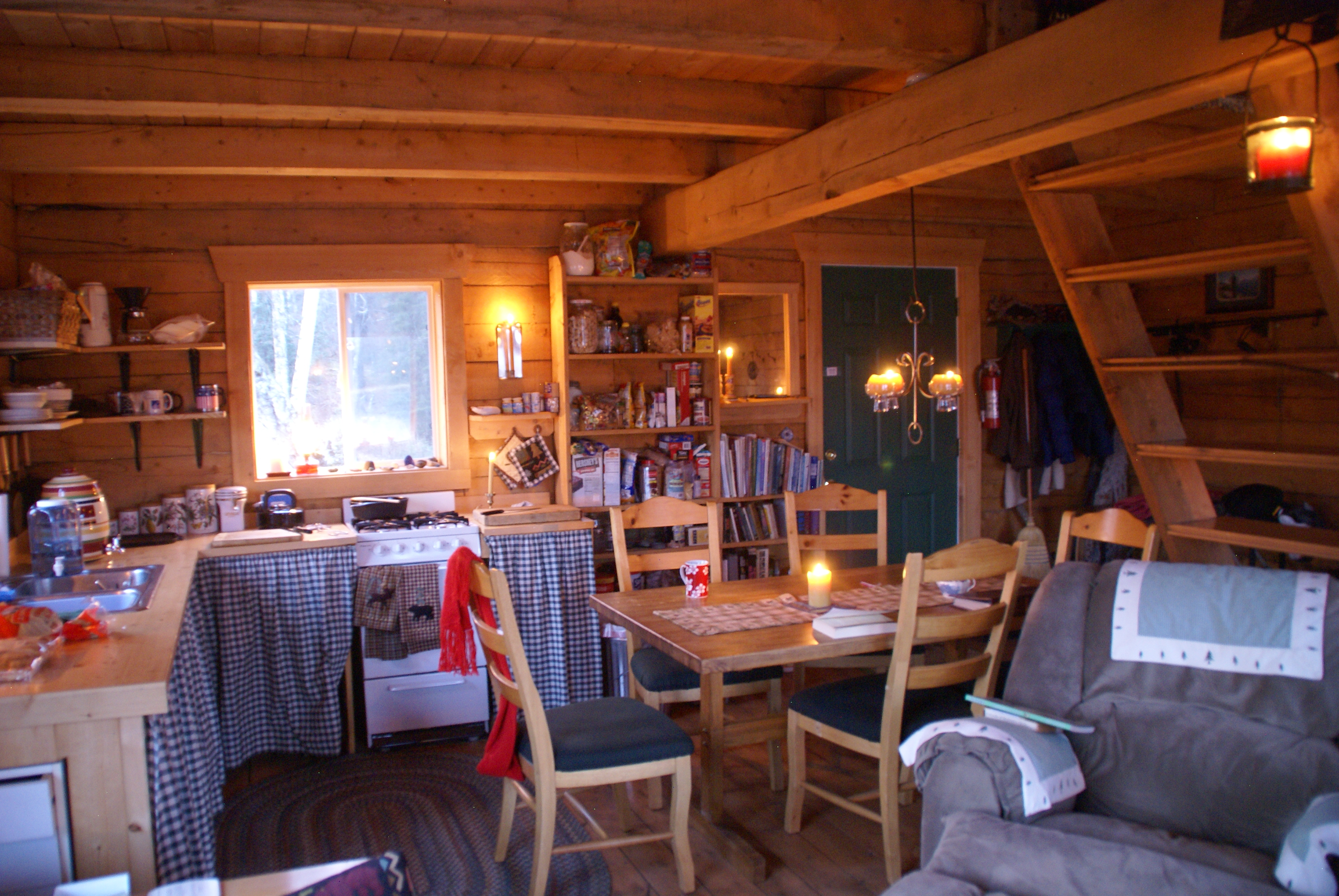
Our friends Margie and Gary (parents of a buddy from college) were so kind to lend us their cabin, located on a private lake in the middle of the wilderness. They warned us that the cabin had no modern conveniences, but I was shocked to find it sublime and perfect. This cozy, two-story log cabin (built themselves) sat on a plot of land over looking a the most serene lake I have ever seen in my life.

You could feel the intentional love and care they had put into the place, sense the memories of family get-togethers and late night bonfires, the overwhelming sound of silence. When it was dark, you lit candles. When you were cold you put more logs in the fire. And when you needed to relax, you had a hot chocolate and marveled at the stillness. With Michelle there, unplugged from work, the world, I could have sworn it was some small glimpse of heaven. (Thank you Margie and Gary. Words cannot express how awesome the experience was!)

We do a “Jumping Jedd” picture for every place we travel to.

Alaskans must think we are pretty funny as we made loud noises and clapped our way through trails. In our defense, we did see a baby cub brown bear fishing in a stream….who knows where mama bear was….
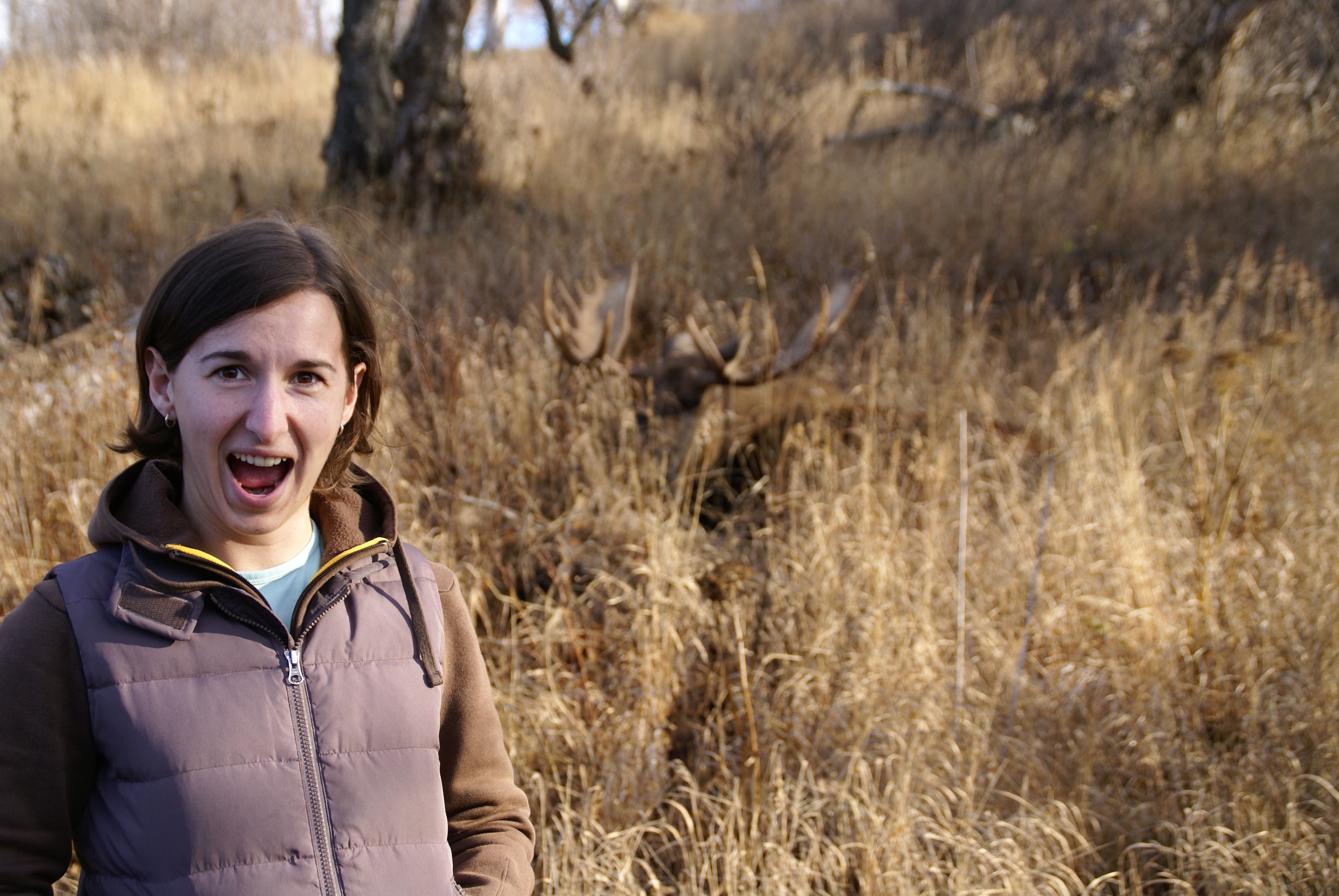
Just walking through a park on the path, talking, minding our own business and suddenly, I grab Michelle’s hand and we both were amazed that ten feet to the side of us was a moose. We didn’t know if they would charge but he apparently felt pretty comfortable with us being there. Ps. Moose are LARGE and can be surprisingly chill.

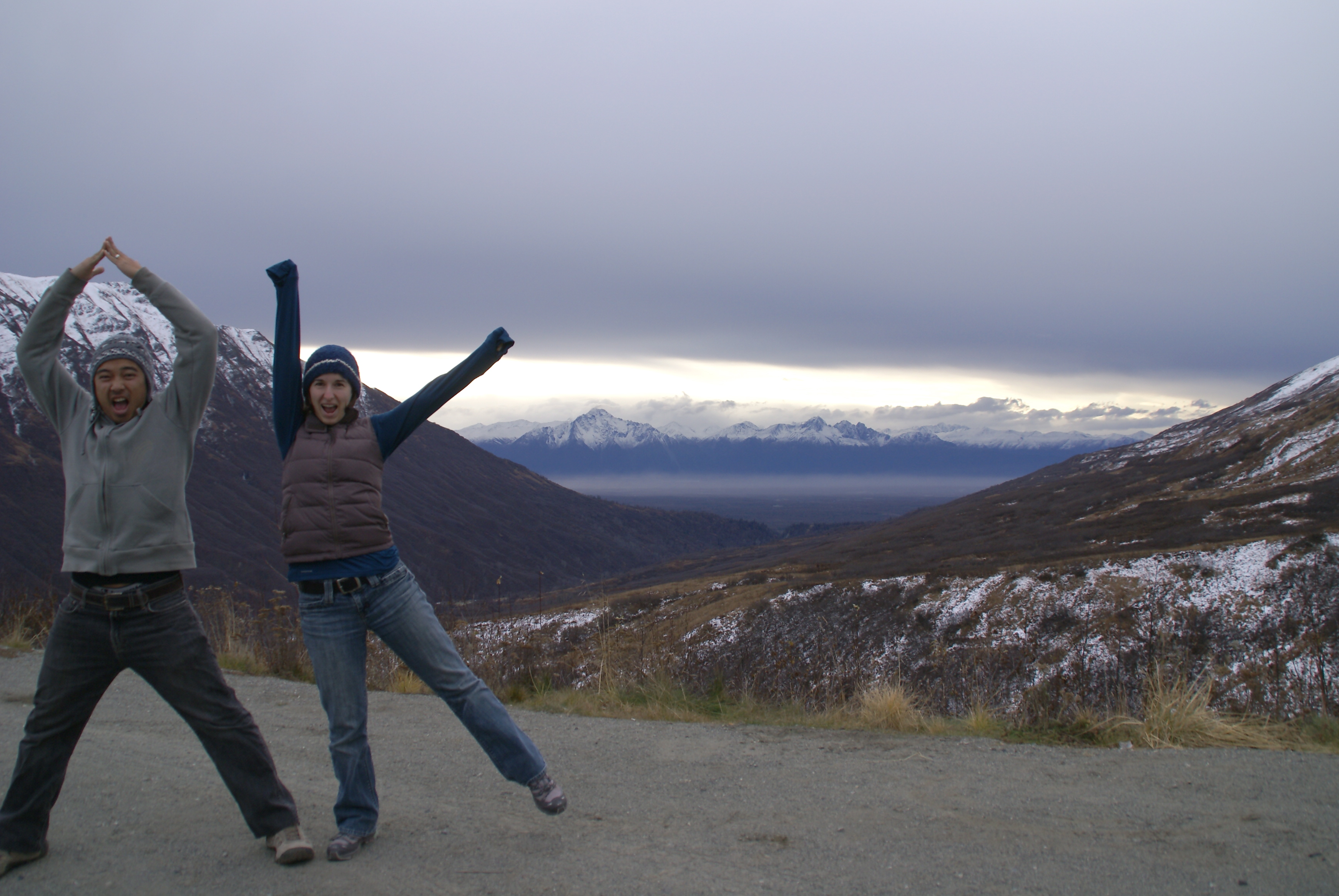
SPOILER ALERT: I won’t tell you exactly what happens in the Into the Wild story, but I will say this, other then acknowledging how beautiful Alaska is, there is something else that the boy in the story and I have in common; we both have come to realize that there is something so beautiful and special about sharing incredible moments with someone- that we were meant and intended to be in relationship. Somehow the story- and our lives- seems so much better this way. You can say you drove to the top of the mountain, tell people of the amazing view, the way you felt breathing in the cool crisp air… Or, you can remember it with someone you love. Anyways, it’s difficult to take a picture trying to make the “A” and “K” of Alaska on your own…. 🙂

* Michelle Thoughts, Other Travels, Videos

Nicaragua Service-Learning Trip: Recap Video

The following video is a recap of my (Michelle’s) Nicaragua Immersion in May, in which I had the opportunity to accompany a group of 18 university students and one other staff member on a 3-week service-learning program. The video shows just a glimpse of all that is involved in the process of our Center’s service-learning programs, which are coordinated by student leaders, and require a sizable commitment of preparation and fundraising from students for the entire academic year. Once in Nicaragua, you can see what a range of issues we encountered and how students were changed from the experience. This is one of the most powerful, educational experiences I’ve ever participated in; I hope you can tell from the students’ testimonies in this video how much it impacted them as well.

* Michelle Thoughts, Other Travels

U.S. Goes Bananas in Nicaragua

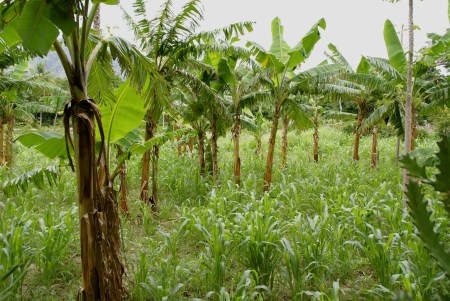
On the Nicaragua Immersion this past May, two of our site visits really stood out to me. One, the factory where we saw North Face jackets manufactured (read about that visit here) and two, the tent camp where former banana workers have been protesting for four years (read more here). Combined, these brought to light much of what has gone horribly wrong with the U.S. trade policies we thought were supposed to be fair and helpful. To make a long story short, we heard straight from the source that big fruit companies like Dole have used a harmful fertilizer, Nemagon (which had been banned in the States twenty years earlier), on its Central American plantations. The unknowing banana workers now suffer from sterility, cancers, and many other diseases. One thousand have died and 16,500 were harmed in some way. Hundreds have left their families to protest in the capital, living in a tent camp until something is done. Meanwhile, Dole refuses to acknowledge its wrongdoing. It turns out, we aren’t the only ones who think the story of the banana workers should be heard. In fact, it was so scandalous that a documentary filmmaker covered the trial the banana workers brought against Dole in a new film titled “Bananas“, and companies

around the globe were watching carefully as the case “would open the US courts to other global victims of US-based multinationals.” Dole even tried to sue the filmmaker for screening the movie in the U.S.! While it hasn’t been released yet, the premiere in L.A. happens this week, as does the filmmaker’s court day to win back lawyer fees for having been inappropriately sued. Please visit www.bananasthemovie.com to learn more!

BANANAS!* trailer

from WG Film on Vimeo.

Educate Yo’self: The Background Info (Source: http://witnessforpeace.org/article.php?id=225)

Free Trade opens up markets by eliminating all taxes and tariffs on products being imported and exported, creating one large economy in which everyone competes. It encourages countries to produce for export rather than for their own consumption. Under this prescription, impoverished countries like Nicaragua have been obligated to offer cheap labor to the global economy. In the apparel industry, the cheapest countries will succeed in attracting foreign-owned garment assembly factories (maquilas).This system has spawned the notorious “race to the bottom:” a race of developing countries to be the cheapest option for the multinational corporations that produce and sell our jeans and t-shirts. So Nicaragua offers maquila investors the lowest wages in Central America, governmental tax breaks, and unenforced labor laws.

Such cost savings for U.S. corporations have taken their toll on Nicaragua’s workers. Foreign-owned maquilas routinely violate and disregard Nicaragua’s worker-friendly labor laws. The Ministry of Labor does little to enforce the law, knowing that the companies may balk at increased production costs and abandon Nicaragua for a country offering more lax laws. As a result, thousands of Nicaraguan workers are regularly insulted and harassed by superiors, forced to work late into the evenings, fired for pregnancy or illness, and denied legally-entitled pay and benefits.Unions that attempt to halt such exploitation are summarily dismantled by managements’ blatant acts of union-busting.

Under CAFTA, sold to the Nicaraguan public with the promise that a surge in maquila jobs will replace lost agricultural jobs, the country is becoming even more dependent on the maquila system. Given CAFTA’s failure to establish a realistic mechanism for labor law enforcement, more maquilas likely mean more exploitation. Many also question how long these maquila jobs will last. With the recent entrance of bigger and cheaper contenders like China, Nicaragua now faces grim competition in the global race to the bottom. To win, Nicaragua may need to allow for escalated erosion of workers’ rights.

* Michelle Thoughts, Other Travels

Nicaragua the Wise

As many of you know, I (Michelle) had the great opportunity to travel to Nicaragua for almost three weeks with a student service-learning trip. The experience was amazing and I can honestly say I’ve never learned so much in such a short period of time. This collage of pictures depicts just a few snapshots of our trip, but what it doesn’t show are the profound stories of hardship, wisdom, and resilience we heard from the Nicaraguan people nor the deep, complex issues we encountered in the country. The one request we got over and over from people while we were down there was to share their stories and to remember their communities. Please, you can help me do this. I’ll do my best in the coming blog posts to recount some of the stories, but never hesitate to ask me more about it. (And if you ever have the chance to participate in a “delegation” with the organization Witness for Peace, I can’t recommend it enough.)

We packed our days learning about the culture, the economy, the political history, labor rights issues, health care, coffee and organic farming, fair trade, human rights violations, street children, and more. For example: after a crash course in trade policy and labor rights, we toured a big factory making North Face jackets, then saw a fair trade cooperative factory for comparison, and later sat down for a talk with union organizers who are standing up for labor laws to be enforced in their workplace. I think one of the most shocking themes we saw throughout the trip was how much the United States’ policies, trade agreements, and influence throughout history have impacted Nicaragua to its detriment. As a result, we also came to discover that our role in Nicaragua was not to make changes while we were there (the Nicaraguans should be empowered to change their own country from within) but rather to wield our power and influence upon returning home, where our decisions, purchases, votes, and voice still have a huge impact on Latin American countries. All of this is something I’ll attempt to explain in my next post.

Until then, see our 2010 Nicaragua Immersion blog for more stories from the students.

* Michelle Thoughts, Other Travels, Videos

Haiti Recap Video

Here’s a quick video montage I put together of our trip with Haiti Foundation of Hope in June 2009.  I wanted to show everyone a little piece of each aspect of the Foundation we saw without getting too in depth or lengthy.  It’s about 6 and a half minutes.  Jedd graciously obliged me by doing some narrating. Enjoy!


Related posts:
The People of Haiti
The Land of Haiti

Other Travels

The Land of Haiti

Hey Everyone. So many of you have been asking us questions about our experience in Haiti (what did you do, what was it like, was it safe, etc…) Hland8 and we are going to try our best to answer and share as much about it as possible. It’s hard to truly capture everything that we experienced in a blog, but definitely feel its necessary to try (one of us could actually talk forever but thankfully, his better half keeps him grounded, or at least tries to). In these series of posts, we hope to share with you about the people (Tuesday), the land, the amazing services taking place everyday supported by local leaders and the Haiti Foundation of Hope, and of course, our thoughts and feelings about everything. But we might miss something  and we’d love to hear from you, especially if you have any questions or things you want to know about Haiti and our experience. Please leave a comment or email us. We want to help you know more about this special place. Back to the land….
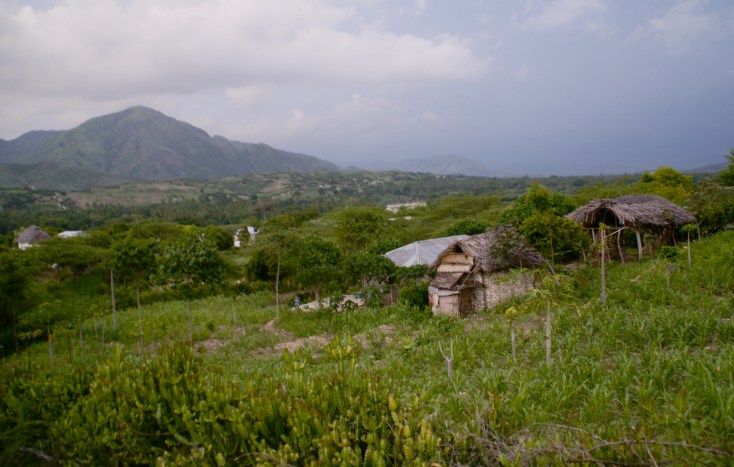
Hilltop

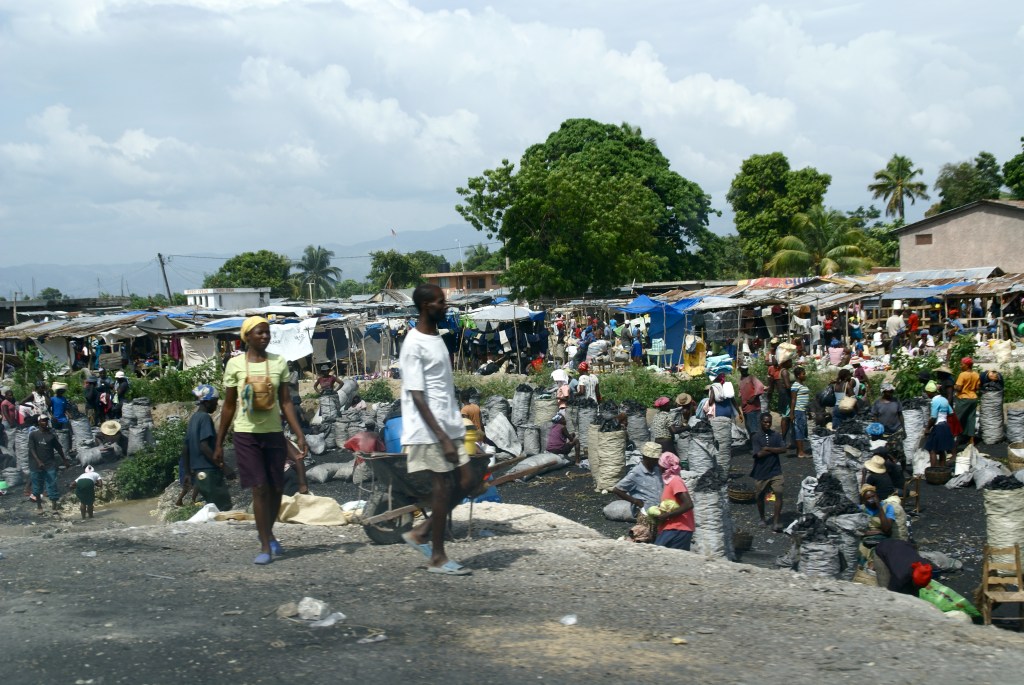
I realized with the “people” post I did a lot of talking and in sharing about the land, I plan to let most of the pictures speak for themselves. The main thing to think about when you look at each one is the relationship between humans and the land. I’ve never been a true advocate for environmental issues and even remained a bit skeptical of the “green” movement and other issues raised. My friend Mike Abbate shares in his book (Gardening Eden) multiple examples of human impact on their local environment. How greed (both from foreign and local businessmen), and unsupervised monitoring and regulation of human activity caused devastating affects, not only to the land and the animals, but more specifically, to the people who called the land home. Haiti is such an example were deforestation obliterated, and literally washed away the land. In simpler terms, humans have cut or burned the trees to make charcoal (notice the coal part) for energy (fires and what not) without any reforestation plan.

Because of the geographical placement of the island (the Caribbean), rains are frequent (thunderstorms and annual hurricanes) which are normally good, but there are no trees (some),

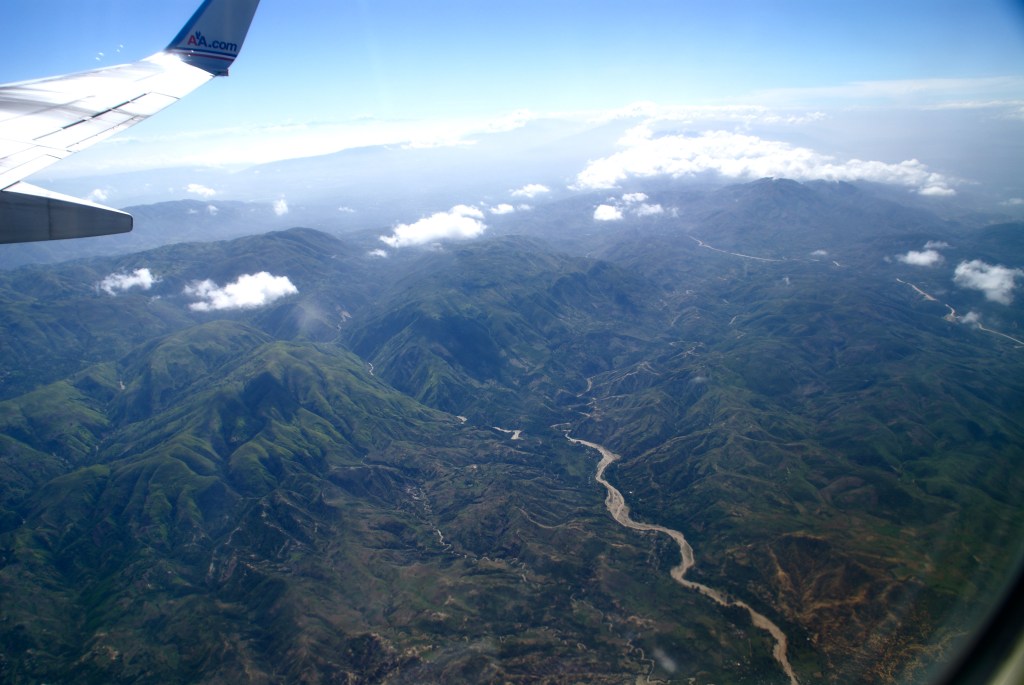
Haiti from air
Notice there are hardly any trees, green from the rains, still no trees

which means the ground is saturated and flooding occurs. Floods lead to accelerated erosion of the land, especially top soil good for farming. There are some good seasons (we witnessed re-growth of plants and farms) but know one knows when the next major flood might wash out everything. The government doesn’t do enough to protect the trees. There are no incentives or alternative programs for people to get energy another way.  There is little in terms of education to teach people the importance of trees. Pastor Delamy shared with us a Haitian proverb, “Sometimes prevention is better than healing”. Proactive measures such as education are important and effective means to fight this battle in Haiti (and in the world). If not, life and land will continually wash away.

Once a road, now a river for constant floods until they can repair it permanently
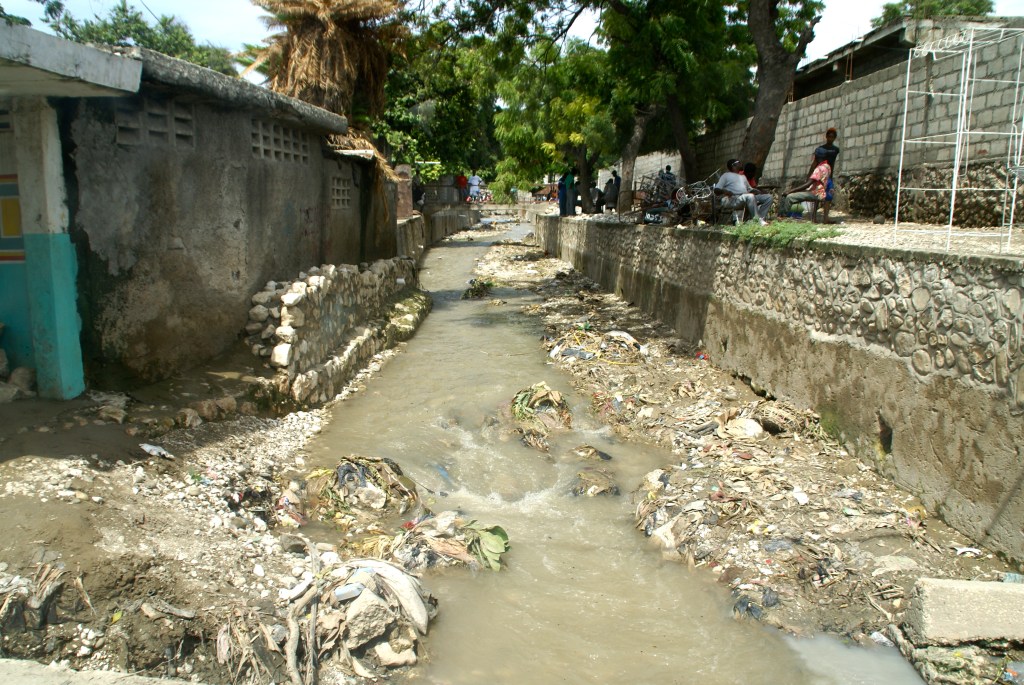
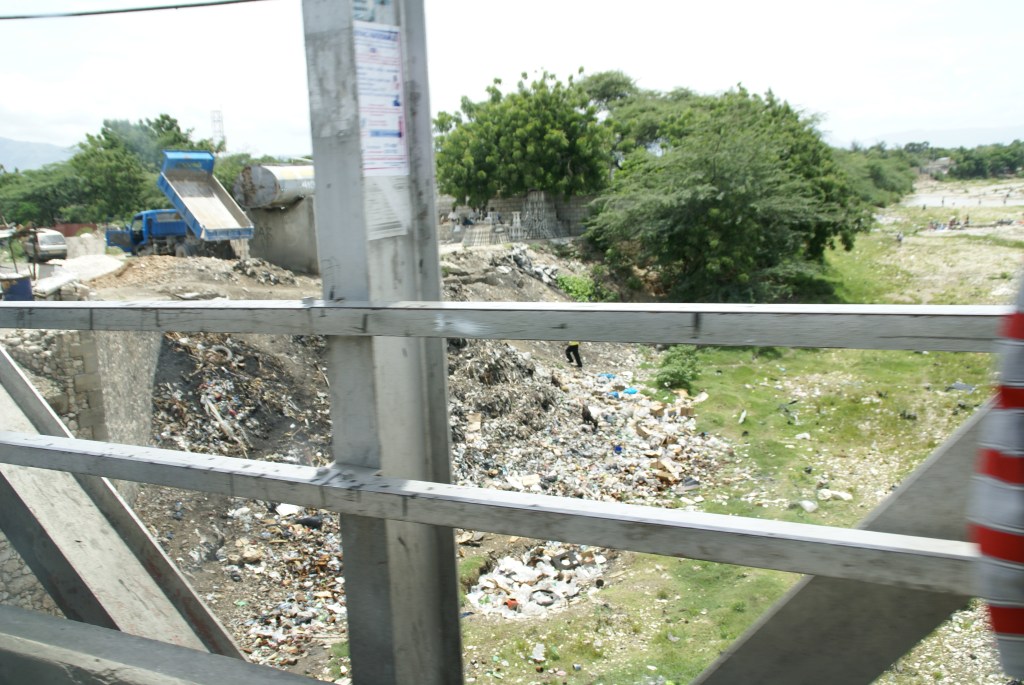
Water flows from the mountains but most are polluted from trash
and here's why they are polluted. Notice the dump truck in the upper left corner
and here’s why they are polluted. Notice the dump truck in the upper left corner
Fields of Rice (only in one area of the country from what it looked like)
See how close everything is built next to each other? Taken from the air by Janan

NOTE:  I realized after looking over this post, you might think Haiti is not beautiful. That’s NOT true. These are just the major things that really stood out to me. I also didn’t want to duplicate using pictures I posted before. Haiti IS beautiful and I think that’s what makes these pictures important to me: if nothing is done, the beauty of this land and others will be swept away…


Related posts:
The People of Haiti
Haiti Recap Video

Other Travels

The People of Haiti

HPeople4

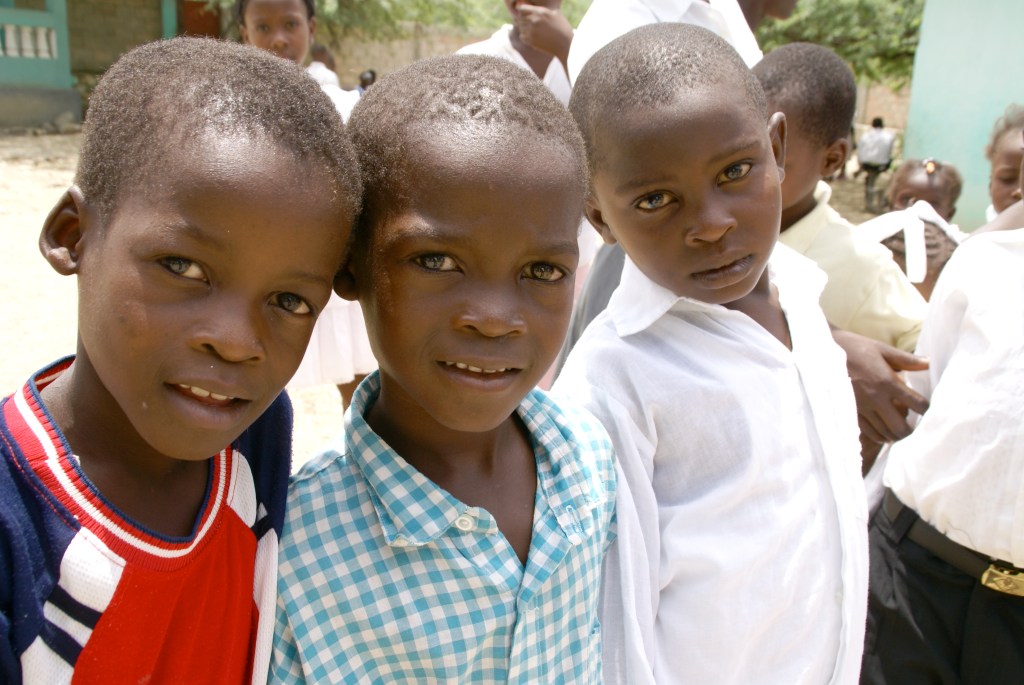
When I think about the people of Haiti, I am reminded of their beauty both in spirit and in appearance. They are striking and hauntingly beautiful, particularly when they smile which is not their typical first glance impression. Most Haitians at first glance seem unapproachable and a bit irritable. It’s not that they look mean, just not inviting. However, after saying hello or making eye contact, this facade or assumption I had of their personality, quickly gave way to their true nature of warmth and joy. HPeople20

They are very strong and physically fit people, being very active in their day to day routines and walking as their main form of transportation. However, the most distinctive and beautiful thing about Haitians in regards to their appearance is their eyes. HPeople17Haitians have very large, engaging eyes and a lot is said through them. I often found myself drawn to the way they would look at us with such curiosity as I looked back with wonder. I wondered what many of them thought about us being there. Whether or not the sight of us, our clothes, our actions, or words that we used seem strange or even silly.
I was very surprised that most of the people we met in Terre Blanche had such an intentional desire to get to know us on a personal level. They wanted to build relationships with us, wanted to know about who we where and why we felt God had brought us there. We loved that they felt very comfortable with us asking questions to them about their lives and knew they wanted us to know more about them.

In Terre Blanche, as we walked around the village, people would come out of their thatched roof homes to greet us with joy, and children in groups of 10 or more would follow us asking us to take photos of them. Sadly, not of all Haiti is like this and it’s a true testimony of the miracles and wonders God is doing to instill hope in the people of this village and in many other parts of Haiti (where the people of Haiti are in partnership with aid workers).

Overall, life in Haiti is difficult. I’ve often complained here in the US about not having enough money to buy something that I want, or worried about what I don’t have, but the truth is, compared to majority of the people there, I am a very rich man and was humbled at what I witnessed.

HPeople11

HPeople2

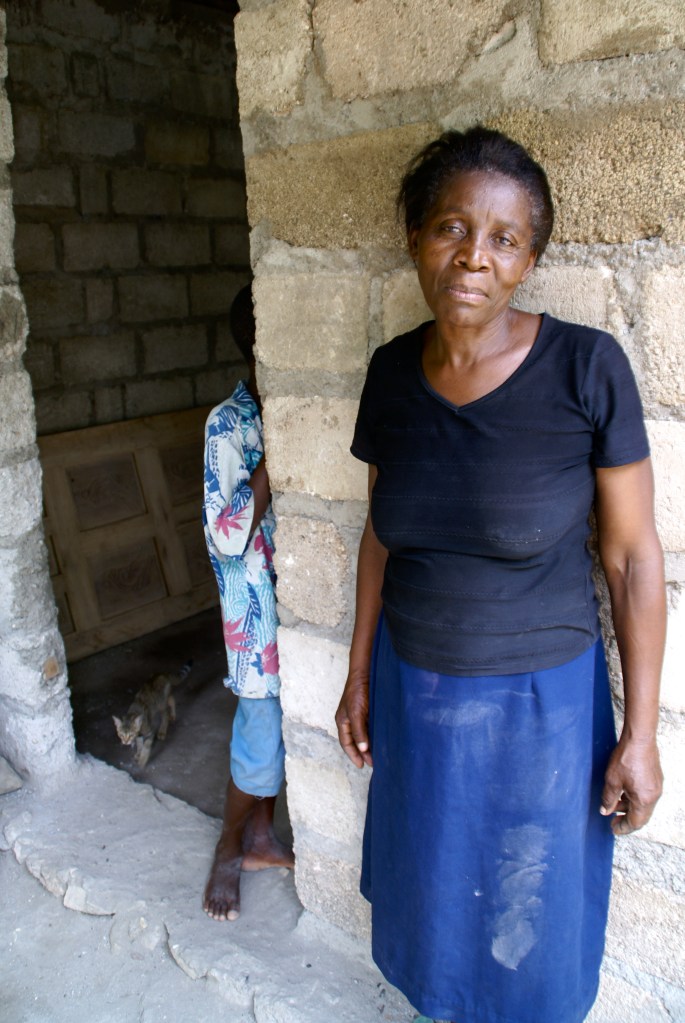
The types of conditions that Haitians live in seem unfair, especially for how hard they work to survive on a day to day basis. It is extremely difficult to get access to clean water, most of the once fertile land (more about the land another day) has been washed away by floods (and continue to be damaged by floods), roads and buildings have been and are continuously devastated by storms, and the government is inadequately equipped or adept to deal with the massive needs of the people. Many do not have a lot of clothes or food, and then if something medically goes wrong, getting proper health care becomes a major issue (thank God for the clinic). But even facing all of this, I was inspired by their spirit and the countless stories of love and sacrifice they had for each other.

hpeople100

Before we went to Haiti, Pastor Delamy thanked us for the hope we would bring to Terre Blanche and the people of Haiti. Yet, when I was there, I learned about family members walking miles barefoot in 90 degree weather to bring love ones to the clinic, proud parents who try hard to feed their children and can’t, a woman around 80 years of age who walks 9 miles a day to conduct her business (and succeeds), and Haitian leaders who give everything of themselves (even facing dangerous situations) in the hopes that they can make a difference in the lives of their people.

If anything, I came away with hope from the people of Haiti, that even in the poorest country, life on a very rich scale takes place, where miracles abound, and a strong sense of God’s presence rests among the people. I guess a part of me is envious because their faith and trust in God seemed so real, being that their needs are great, whereas often times my prayers and requests to God of what I need seem so trifle.

Pastor Delamy thanked us at the end of our trip for loving his people, who he loves and thinks of as his children, and it reminded me how God as father loves us as children. Can I learn to trust and believe that God will provide for all my needs and quiet my worries and remember the hope and faith that the beautiful people of Terre Blanche have in Him?

HPeople7

HPeople21

HPeople12

HPeople8

HPeople9

HPeople26


Related posts:
The Land of Haiti
Haiti Recap Video
Learn more about Haiti Foundation of Hope

Other Travels

Haiti Snapshots

The following pictures were taken mostly by Jedd but hand-picked by me (Michelle) as a snapshot of our trip to Haiti.  I think we all agree that we wish we could have stayed longer, but we made good use of our time in the few days we had.  When we weren’t touring the surrounding villages, observing how water filters are made, guest-teaching in English class, interviewing ladies in the microloan program, or witnessing the other ministries at Terre Blanche, we spent our spare time helping out in the clinic.  During the trip, I was especially impressed by the Haitian community leaders who truly embody servant-leadership.  Pastor Delamy and his family (Elvie, Cassandre, Delwin, and Danika) are an indescribable blessing to everyone they meet, giving their lives to the people of Haiti and going the extra mile to take care of us Americans.  Delamy was a rich source of information, initiative, ideas, and inspiration.  With a heart as big as the country itself, he seemed to never stop caring for and motivating his people.  I was also very impressed by the Foundation’s submission to Delamy’s leadership.  Whenever there was a decision to be made, it was not in the hands of the Americans but the Haitians.  While we had brought expertise in fields like medicine and business, we weren’t there necessarily to solve problems ourselves but to support the nationals who are already taking that leadership.  mfavs2
The beautiful people of Haiti.
mfavs1
Our team: Yvonne, Justin, Dr. Janan, Dr. Joe, Linda, Larry, Dave, Ron, Tom, Jedd and me.
mfavs
A glimpse of Haiti from the road, the plane, and the places we stayed.

Other Travels

Pics!!! (Haiti)

Bonjou,

It’s about lunch time here in Terre Blanche. While some of the team helped to run the clinic, a few of us had a great opportunity to visit with the neighboring communities (I would put their names on here but I can’t spell them). Just wanted to share with you a few pics from our trip so far. Can’t write much as the internet connection has been spotty (we are blessed to have internet connection at all). Thanks again for your prayers. You can see God working through the people and in this place. It’s nothing but amazing. Till next time,

J&M

Beautiful Terre Blanche
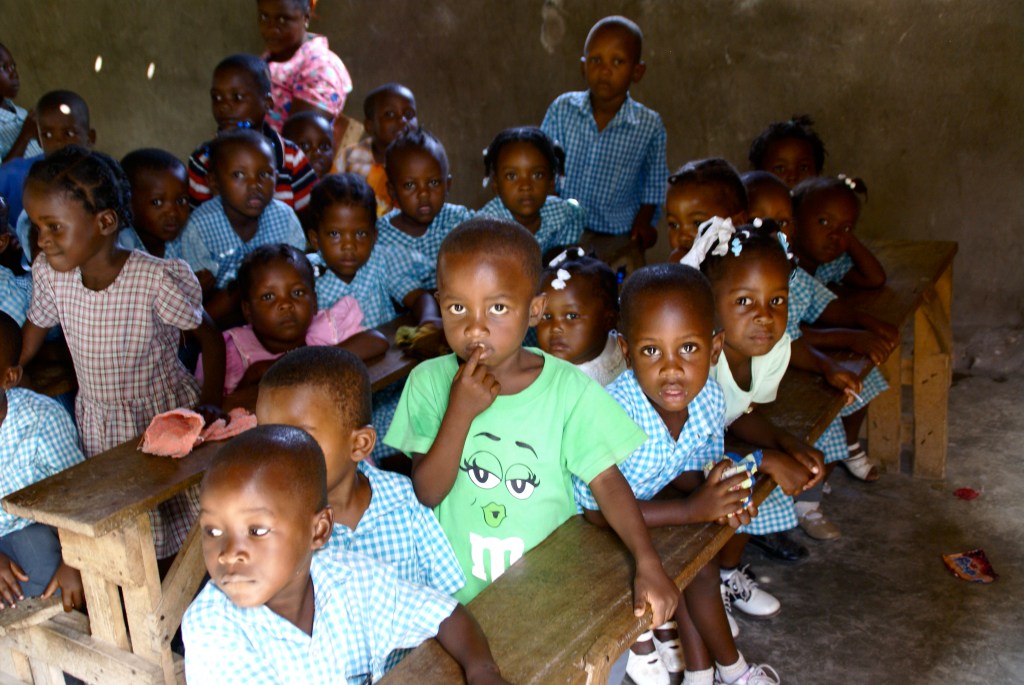
Some of the children of Terre Blanche
Cooking rice for the feeding program
Some of the children of the feeding program
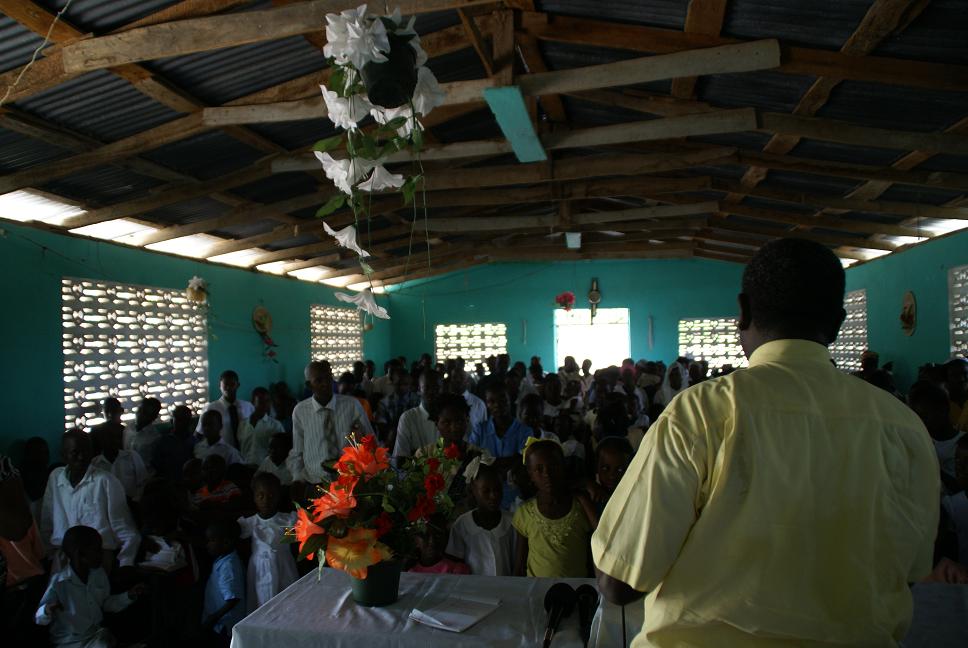
Pastor Delamy leading the congregation in worship