* Life Updates, * Michelle Thoughts

The Wonderful World of Student Leadership

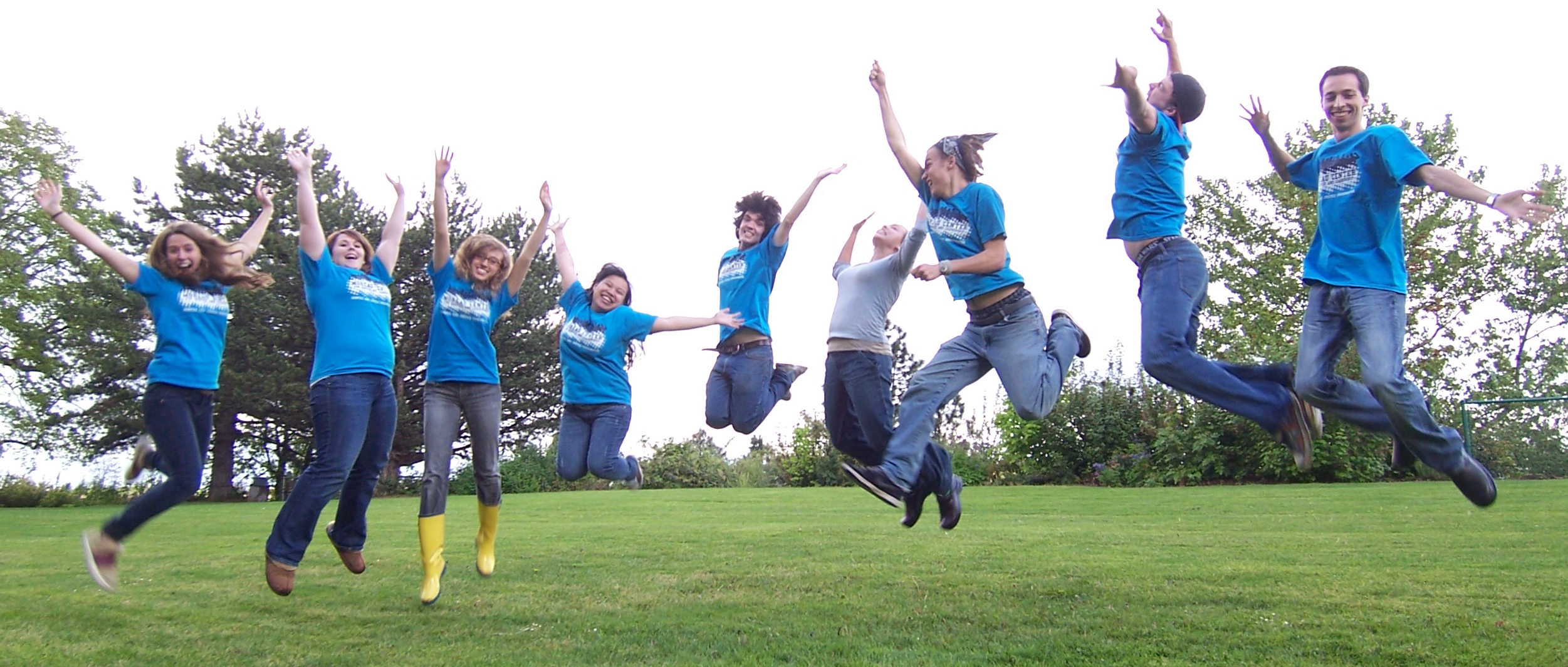
Another year has already come to an end in the world of the University where I work. Looking back, it was a year of excitement and blessings, and the opportunity to work with amazing student leaders was definitely a highlight. Seeing their passion and their growth over the year is what gives so much meaning to my work. These students are inspiring their peers, dedicating themselves to service in the community, coordinating meaningful events, digging deeper into the issues of our world, and bringing life into our office every day. It’s been a real privilege to take part in their journey.

This month I also have the privilege to travel with another amazing group of students. We’re heading off to Nicaragua May 7th to the 25th and exploring the effects of U.S. policy, visiting fair trade coffee farms, learning from local leaders, touring orphanages and social service agencies, living with families, and working alongside a community to build a school. We’ll be working with two excellent organizations: Witness for Peace and Seeds of Learning. After seven months of weekly meetings and hours upon hours of fundraising, we’re all anxious to finally be there. It’s going to be an incredible experience for all 21 of us, and one that I am so grateful to be a part of. We won’t have a whole lot of internet access but you can check in on us through the Nicaragua Immersion blog.

Until next time…

* Michelle Thoughts

Big Ideas

Big ideas. As many of you know, Jedd and I are full of them. Within 15 minutes of first meeting each other back in July 2007, our conversation quickly turned, revealing how we were each entrepeneurs at heart and felt called to non-profit work. Most recently, we dreamed up our own TV show/documentary where we would travel the country in a veggie-oil RV on a quest to find creative ways that people are practicing “voluntary simplicity” (from community living to urban farming to self-sustaining homes and more). Apart from all the cool people and places we would encounter, can you imagine the entertainment value? [Jedd makes outrageous pronouncement. Then, close-up on Michelle’s lifted eyebrow. Jedd dances, trying to get a reaction. No reaction. Etc.] If anyone can line up a sponsor, let us know! By the way, we discovered days later that a somewhat related series was done on the Sundance Channel, called “Big Ideas for a Small Planet.” We recommend watching it on instant Netflix.

Other big ideas of ours include starting an inter-generational, intentional living community; a multi-functional coffeeshop/community/ministry center (like Q-Cafe in Seattle); a non-profit/co-op residence hall for low-income University students; an annual Serve Portland ministry conference (inspired by Hawaii’s H.I.M. conference); and many, many more. I have little doubt that one or more of these ideas will happen in one way or another at some point in our lives. “With our powers combined!” We know we are surrounded by amazing friends and family with all kinds of talents, skills, and experience that could come together in creative and synergistic ways.

I’m sure some of you have “big ideas,” too. We’d love to hear about them. Please share!

* Life Updates, * Michelle Thoughts

Preventative Medicine: Marriage Counseling

I was one of those people- the child of a whole generation of people, in fact- who associated the need for “counseling” with being “crazy.” A stubbornly independent thinker and someone who processes things slowly and internally (if at all), I never really understood why I would ever need to go to a counselor. Plus, it costs a good amount of money and that always poses an obstacle for me. However, when Jedd and I were engaged, I had heard from person after person about how worthwhile pre-marital counseling can be. I finally gave in. Despite my preconceived ideas and price sensitivities, Jedd and I both knew the first priority was to invest in our marriage. We found a great counselor. And yes, it was worth it.

As a matter of fact, we’re back for seconds! A year and a half later, we decided our Christmas present to each other would be follow up sessions with the counselor. It may not be the most fun gift, because there’s always more to work on in a marriage, but hopefully it will prove to be fruitful and long-lasting. Because it can be so easy to get into habits and fall into ruts, our goal is to do something at least once a year to work on our relationship. It’s one more way we’re trying to be “simply intentional.”

* Michelle Thoughts

In Defense of Food

Eat food. Not too much. Mostly plants.

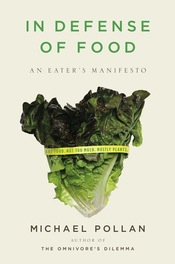
These three (seemingly obvious) phrases are the premise and the thesis behind the whole book, In Defense of Food by Michael Pollan. I don’t want this post to turn into a book review but I do want to share what I’ve learned from reading it, as it really has been informative and makes me want to learn more about food. (Another interesting piece was the film “Food Inc.”)

“Oddly, Americans got really fat on their new low-fat diet,” Pollan writes of one food fad originating in the 70’s. We think we can determine what is healthy for us by a food’s scientific components. Unfortunately for all the “advances” we’ve made in nutrition science, the Western diet seems to have backfired, causing more disease and obesity than ever before. The truth is, foods are extremely complex and our scientific understanding of them is limited. Perhaps the best way to stay healthy is stick to what has kept us surviving for thousands of years: eating real, whole food. Not the refined, chemically-altered, supplemented imitations of food that stocks much of our grocery stores. Often confused with real food, I learned they’re actually “food products.”

“We have known for a century now that there is a complex of so-called Western diseases- including obesity, diabetes, cardiovascular disease, hypertension, and a specific set of diet-related cancers- that begin almost invariably to appear soon after a people abandons its traditional diet and way of life.”  Did you know that isolated peoples, no matter what kind of traditional diet they eat- from seafood, dairy, meat, or vegetarian- have absolutely no need of a dentist? “The human animal is adapted to, and apparently can thrive on, an extraordinary range of different diets, but the Western diet, however you define it, does not seem to be one of them.” I just find it fascinating that we’ve tried so hard to manufacture better food when, all along, nature was doing its job just fine.  When a fruit is ripe, it smells and looks its best and it has reached its highest nutrition content. With artificial colors, flavors, and synthetic sweeteners- “the senses we rely on to assess new foods and prepare our bodies to deal with them” are not getting the right information. It’s no wonder “thirty years of nutritional advice have left us fatter, sicker, and more poorly nourished.” According to the book, gaps in science, media and marketing pressures, and even hasty government regulations have all played a role in the complex web of reasons why we’ve gotten so off track with our food.

It seems backwards, but the traditional diets of our past- before technology or industrialized food production came into the picture- were actually better for us. Before, we didn’t need nutrition experts- we just ate what, how, and when our culture dictated us to eat. And we ate what was available to us- in season. These days, even innocent apples have wax applied or are stored in gas chambers for up to a year. It’s kind of shocking what we have started to put into our bodies without knowing it.

So Jedd and I have been talking about doing another challenge, and we want to invite our friends and families who are up for it. We want to try to eat whole, minimally processed food for one month. Yes, it may cost a little more. But the author actually mentions that if you spend more of your paycheck on food and more effort preparing it, you are less likely to over-eat. The French are a great example of this. (“How often would you eat french fries if you had to peel, wash, cut and fry them yourself- and then clean up the mess?”)

Suggestions from the book we would follow in our challenge are as follows (PS. We’ll be doing this in the summer for a higher success rate)… Avoid food products with ingredients that are a) unfamiliar, b) unpronounceable, c) more than five in number, or that include d) high fructose corn syrup. Avoid food products that make health claims (they’re probably from big food companies and altered in some way). Shop the peripheries of the supermarket and stay out of the middle. Shop at farmer’s markets. Eat meals. Do your eating at a table. Don’t get your fuel from the same place your car does. Try not to eat alone. Eat more slowly and know when you’re full. Cook food yourself. Grow what you can yourself. Eat wild foods when you can (plants and/or animals). Eat well-grown food from healthy soils (and only eat animals that eat healthy, unprocessed diets too).
* Michelle Thoughts

Voluntary Simplicity: concluded

I never concluded with my favorite quotes from the Voluntary Simplicity book by NWEI so here they are:

Chapter 5: Living Simply on Earth

“Most of us get almost all the things we need by buying them; most of us know only vaguely, if at all, where those things come from; and most of us know not at all what damage is involved in their production. We are almost entirely dependent upon an economy  of which we are almost entirely ignorant. … To build houses here, we clear-cut forests there. To have air conditioning here, we strip mine the mountains there.  To drive our cars here, we sink our oil wells there. It is an absentee economy.”

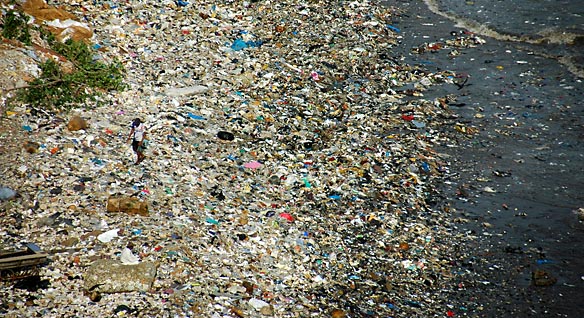
This quote may come off as very pessimistic. What are we supposed to do? But I think it’s worse to be in denial or ignorant than to feel the weight of our problems. By paying attention to the consequences of our actions and our purchases, we can start down the path to being more responsible, one step at a time. I heard recently that there’s a patch of garbage floating out in the Pacific Ocean that is the size of Texas! It can be seen from space! The way we’re consuming and using resources clearly has its effect. Something’s got to change.


“I suggest that each of us strive to fall in love with our own daily life. If we are not loving the life we live, we need to change it, right now, today.”

This quote stood out to me as well. I often focus on having a meaningful life in the grand-scheme-of-things way: my career, big accomplishments, changing the world. But here it says to fall in love with your “daily life.” One thing this series of readings reminds me to do is find joy in the little things, in the journeys, in the time between big accomplishments, in daily life. I confess I am not always in love with my daily life because I’m too focused on the future or I don’t use my time wisely. How much fuller could my life be if I had more appreciation for what would otherwise seem ordinary? If I didn’t zone out on the way to my “next thing”? And I like how no-nonsense this author is if you aren’t in love with your daily life: Change it. Right now. No excuses. Life is too short to wait for circumstances. So that’s something I will be working on is making those changes in my attitude and my day-to-day activities so that I can truly say I am in love with my own daily life.

* Michelle Thoughts, Videos

Advent Conspiracy

As Christmas approaches, we want to share these videos from adventconspiracy.org, which played an important role in changing our perspective on Christmas giving.  It’s about spending less but giving MORE.  More relationally, more meaningfully, more intentionally.  Here’s what Advent Conspiracy says:

“The story of Christ’s birth is a story of promise, hope, and a revolutionary love.

So, what happened? What was once a time to celebrate the birth of a savior has somehow turned into a season of stress, traffic jams, and shopping lists.

And when it’s all over, many of us are left with presents to return, looming debt that will take months to pay off, and this empty feeling of missed purpose. Is this what we really want out of Christmas?

What if Christmas became a world-changing event again?

Welcome to Advent Conspiracy.”

“Time is the real gift Christmas offers us, and no matter how hard we look, it can’t be found at the mall. Time to make a gift that turns into the next family heirloom. Time to write mom a letter. Time to take the kids sledding. Time to bake really good cookies and sing really bad Christmas carols. Time to make love visible through relational giving. Sounds a lot better than getting a sweater two sizes too big, right? Need a few ideas? Just click here and see what others have done to give more during the advent season.”

* Michelle Thoughts

Making A Living: Voluntary Simplicity cont.

Chapter 3: Making A Living

“We must take time to dress for our jobs, commute to our jobs, think about our jobs at work and at home, ‘decompress’ from our jobs.  We must spend our evenings and weekends in mindless ‘escape entertainment’ in order to ‘recreate’ from our jobs.”

“How many people have you seen who are more alive at the end of the work day than they were at the beginning?”

“For most human history people only worked for two or three hours per day.”

“We’ve begun to lose the fabric of family, culture, and community that gave meaning to life outside the workplace. … Because life outside the workplace has lost vitality and meaning, work has ceased being a means to an end [financial support] and become an end in itself. … Our jobs now serve the function that traditionally  belonged to religion: they are the place where we seek answers to the perennial questions: ‘Who am I?’ and ‘Why am I here?’ and ‘What’s it all for?'”

“Having the financial independence to walk away rarely triggers people to do just that.  The reality is, making money is such hard work that it changes you.  It takes twice as long as anyone plans for. It requires more sacrifices than anyone expects. You become so emotionally invested in that world- and psychologically adapted to it- that you don’t really want to ditch it.”

There is this paradox between not letting your job be the center of your life and finding a job that you “come alive” doing.  With the amount of time we spend at our jobs (see first quote), it seems we should find something we truly enjoy doing.  But at the same time, our jobs aren’t necessarily supposed to be the one source of our satisfaction, nor the source of our identity- they’re a means for us to enjoy the rest of our life (assuming we have time and energy left to enjoy it).  I found a lot of “food for thought” in this chapter, and I welcome your comments and reflections.

* Michelle Thoughts

Time: Voluntary Simplicity cont.

Chapter 4: Do  You Have the Time?

“Our task is to balance the many roles we play and refrain from volunteering to understudy everybody else’s.  It can be tough to say no, especially to causes we recognize as worthy.  The goal is to realize that, since we can’t help with everything, our time and stamina need to go into what truly speaks to our hearts.”

“The time you spend preserving your health  is like time invested in a savings account: you’ll get it back plus interest.”

“How much time do you choose to spend with electronic companionship?” (i.e. TV, internet, video games)

“If I am incapable of washing dishes joyfully, if I want to finish them quickly so I can go and have dessert and a cup of tea, I will be equally incapable of doing these things joyfully. With the cup in my hands, I will be thinking about what to do next, and the fragrance and flavor of the tea, together with the pleasure of drinking it, will be lost. I will always be dragged into the future, never able to live in the present moment. The time of dish-washing is as important as the time of meditation.”

Time is an interesting subject for all of us, I think.  As someone who is “a planner” and an “achiever,” I am constantly spending my thoughts on the future.  Pushing forward,  working toward, planning ahead. It’s a struggle to be present to the moment I’m in. Our time is such a precious thing because it passes without hesitation, like a strong current, and it doesn’t come back. Am I spending my limited time on what I’m passionate about? Am I using my limited time to invest in meaningful relationships or in TV shows? Am I joyful with what I’m doing now or am I always looking to the next thing?

* Michelle Thoughts

Voluntary Simplicity

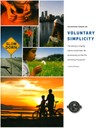
image_previewThis is the title of a short discussion course by the Northwest Earth Institute I recently got to participate in with some college students.  Even if you can’t participate in a discussion group at some point, I highly recommend the reading materials for Voluntary Simplicity (which you can order off their website). I can’t think of a better way to express the things I’ve learned from this course than offering a few quotes from the book to speak for themselves.

Chapter 1: The Meaning of Simplicity

“Simple living is about making deliberately thoughtful choices. The difference is that you are fully aware of why you are living your particular life, and that life is one you have chosen thoughtfully.”

“Life is occupied in both perpetuating itself and surpassing itself; if all it does is maintain itself, then living is only not dying.” Simone de Beauvoir

Chapter 2: Living More With Less

“Americans today [compared to the 1950’s] own about twice as many cars per person, eat out more than twice as often, and commonly enjoy big screen color TVs, microwave ovens, home computers, air conditioning, Post-it notes, and gobs of other goodies. Materially, these are the best of times. … Since 1957, the number of Americans who say they areimage_thumb ‘very happy’ has declined slightly, from 35 to 30 percent. We are twice as rich and no happier. Meanwhile, the divorce rate has doubled, the teen suicide rate has more than doubled, and increasingly our teens and young adults are plagued by depression.  … We were excelling at making a living but too often failing at making a life. We celebrated our prosperity but yearned for purpose.”

To be continued…

* Life Updates, * Michelle Thoughts

Values: Choosing Freedom

I read a quote once that went something like: “it’s not hard to make a decision when you know what your values are.”  It is not enough to say that you value something.  The true test of what you value is in how you spend your time, your money, and your energy.  When faced with a difficult choice, we have to weigh what is truly important to us.  Sometimes when we haven’t stopped to think about what really matters, to think through our values intentionally, we make choices based on whatever strikes our fancy at the time.  While this may not be such a horrible thing every once in a while, we do have to consider that the path we take in life is made up of choices.  Sometimes a single choice can drastically alter the course of our lives, for the better or for the worse.  Other times, it’s the small, seemingly meaningless choices that add up over time, quietly forming habits that shape our future.  Either way, in knowing our values and holding fast to them, we can be intentional about our choices, and in fact, the whole course of our lives.

Jedd and I recently had a head-on confrontation with our values.  columbiaThe choice in front of us was that of buying a house.  At first, the values that came into play were not only financial (how much of our income and savings we were willing to sacrifice to own a property) but also what kind of environment we’d like to live in.  As we often tend to do, we seemed to have opposite views on these subjects only to find out later that deep down, we both wanted the same thing.

We determined that we value being able to host friends, to use our car as little as possible in getting to work, and things like that.  We looked at some condos because the more space we have, the more stuff we’ll “need” to fill it.    Having more stuff is one of the biggest pressures in our culture that is the hardest to fight, but one of our goals is that we’ll only buy things that we use on a regular basis.  Also, Jedd is helping me see that it is often more important to buy quality, durable items than whatever is cheapest in order to save money in the long run and to reduce the amount of needless waste.

Other values of ours that came into the house search were those of community and making a positive impact.  We found a great little house in a very unique community, a neighborhood that was once referred to as a “ghetto” and was intentionally restored.  The neighborhood includes privately-owned homes as well as rental units to allow for people of different income levels.  Various social service agencies, a Boys and Girls Club, and the Home Owner’s Association are present to offer community-building and support to people of diverse backgrounds.  The streets are active with children of all ethnicities- many of whom are from refugee families, single-parent households, etc.  While there are many difficult things about the neighborhood (mainly noise and safety), it’s a place we were very drawn to.  We felt we could be of use in this community, at the least as positive role models.  We considered buying the house as an investment in the community itself, more than in the property.  Sure, we could find somewhere safer, more private, more elegant, easier to live in- but we realized that’s not really what our values are about.

So you may be wondering why we haven’t bought this house.  The conditions were ripe- the economy was in our Jeddfavor.  Well, we came very close.  But it turned out that there was a complication in the closing process that caused us to step back and re-evaluate if we valued the house enough to hang in there.  It was another intense moment in our relationship where I was very unsettled and thought Jedd was on a completely different page about the situation.  But it wasn’t so.  We looked at our values.  Yes, we value investing in a community and being somewhere that challenges us to reach out.  Yes, we are committed to Portland long-term.  Yes, we would prefer for our monthly home payment to be invested into our own house rather than go into a landlord’s pocket.  But we’re two young, entrepreneurial people in the midst of life transitions.  Who knows what we will be doing in two years?  And we still have a lot of traveling and adventuring we want to do.  We concluded that although we’d love to be in that house some day, right now we value the “freedom to chmichelleange” even more.  Freedom to pick up and volunteer abroad, freedom to spend a short chapter of our lives doing something else, freedom to take an opportunity when it comes at us and not have to worry about being committed to a certain place or a mortgage payment.  We’ll sacrifice some rent payments to have those freedoms until we know we’re ready to really dig deep into a neighborhood and not be so mobile.

We will  be moving into a rental by the start of November that allows us both to commute without needing to drive.  If you’re in the area, we’ll likely have an “apartment warming” soon.  A big, heartfelt thanks to the Le’s who have graciously hosted us in their home for several months now!  We are blessed by their invaluable generosity and patience during this seemingly endless transition period.