This time Jedd took over the video editing, bringing to you a glimpse of our trip to Oahu over New Years for a big family reunion, time to relax, help around the house, and get in a little play time as well. It was our last trip “home” before we take off to Peace Corps, and it was full of memories we’ll treasure. Now that it’s been gloomy, snowing, and pouring rain in Portland, these memories prove to be a “light in the darkness” in so many ways. (Since people were asking in our last video: Made with this year’s and last year’s Christmas gifts, our waterproof GoPro camera and Panasonic HDC-TM55.)
Category: Other Travels

Ten States in Two Months
In the last two months:
SEPTEMBER
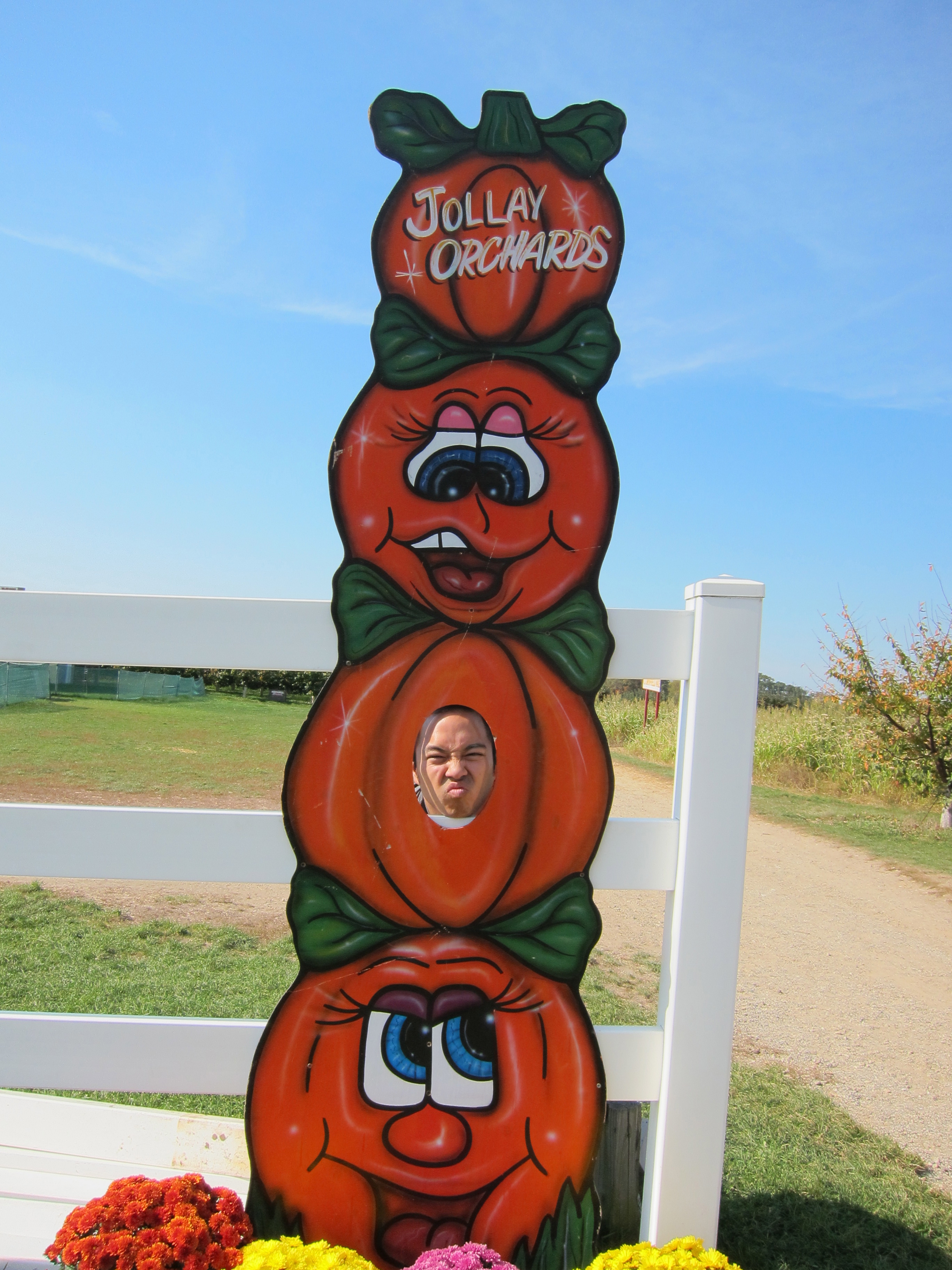
» We traveled to New Orleans to celebrate Michelle’s Grandma’s 90th Birthday!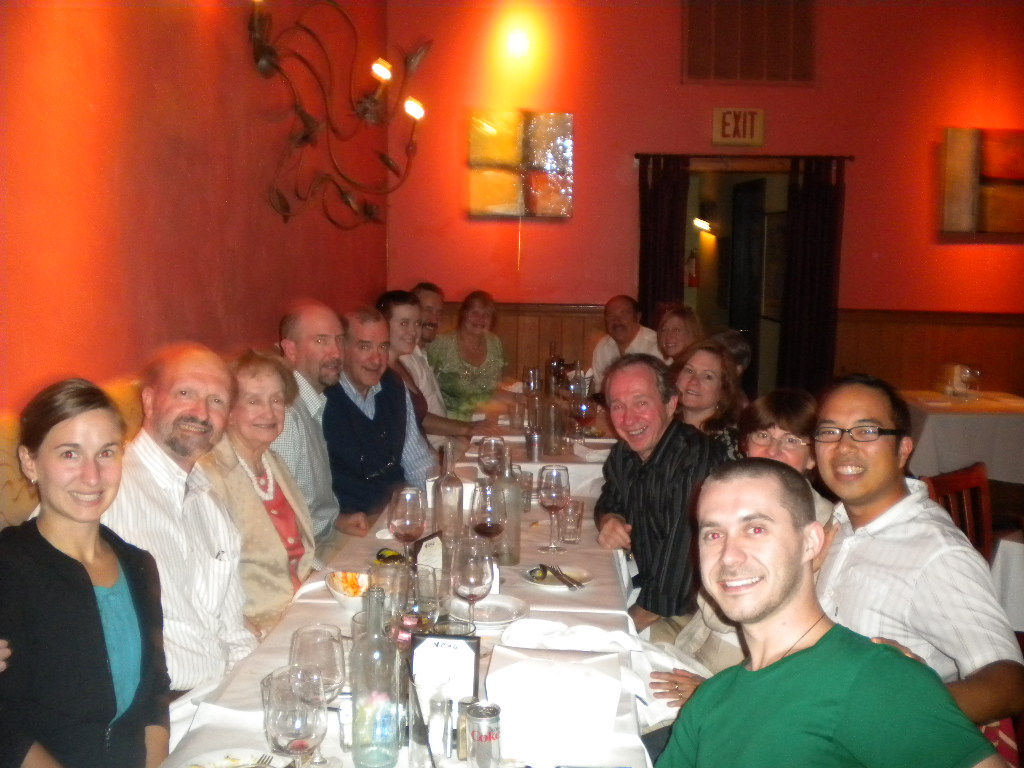
» Traveled to Tampa, Florida to help my Great Aunt prepare for her move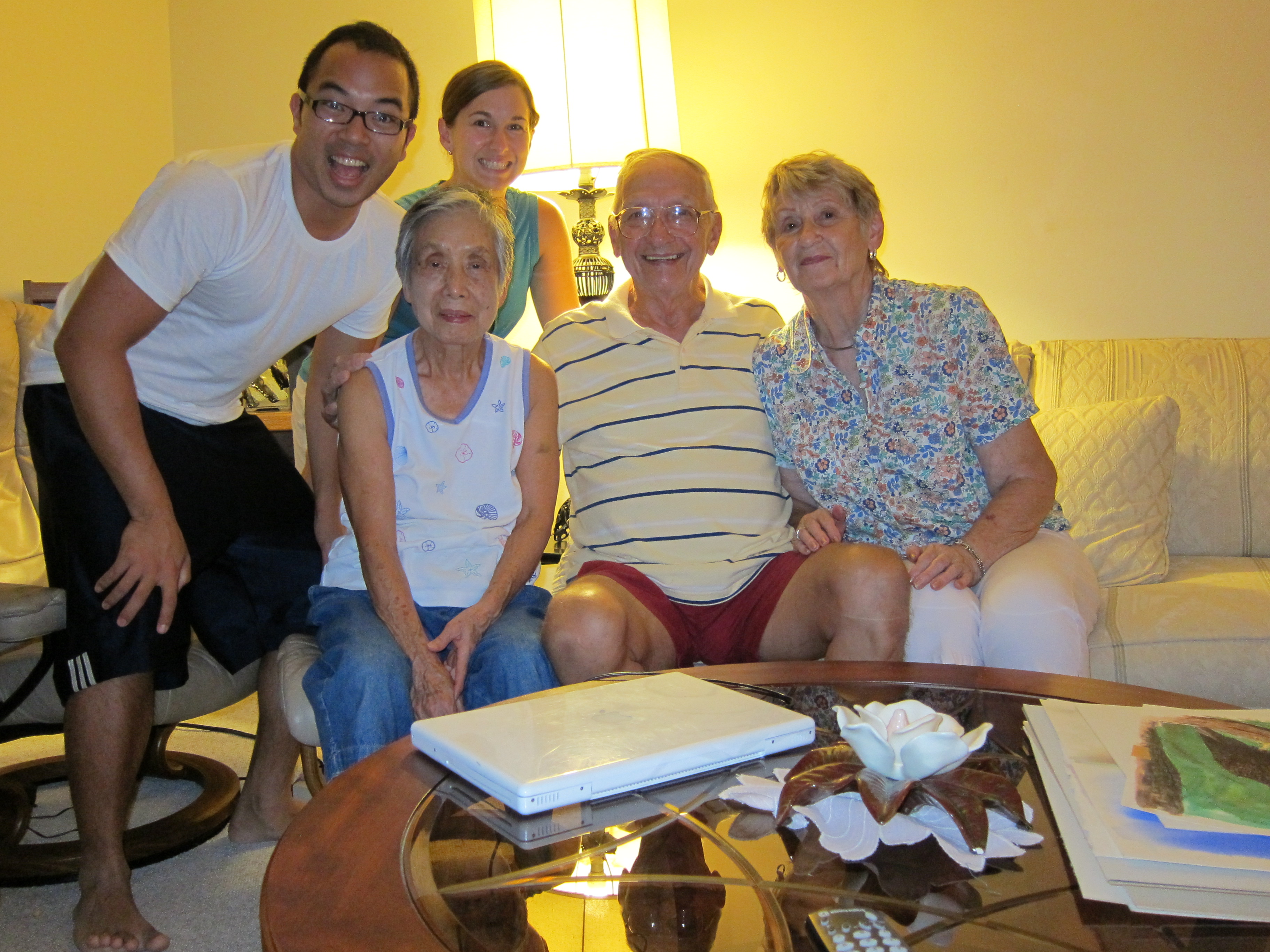
» Began work travel (for PSU Admissions) to Austin, Texas and saw friends Melissa and Dainon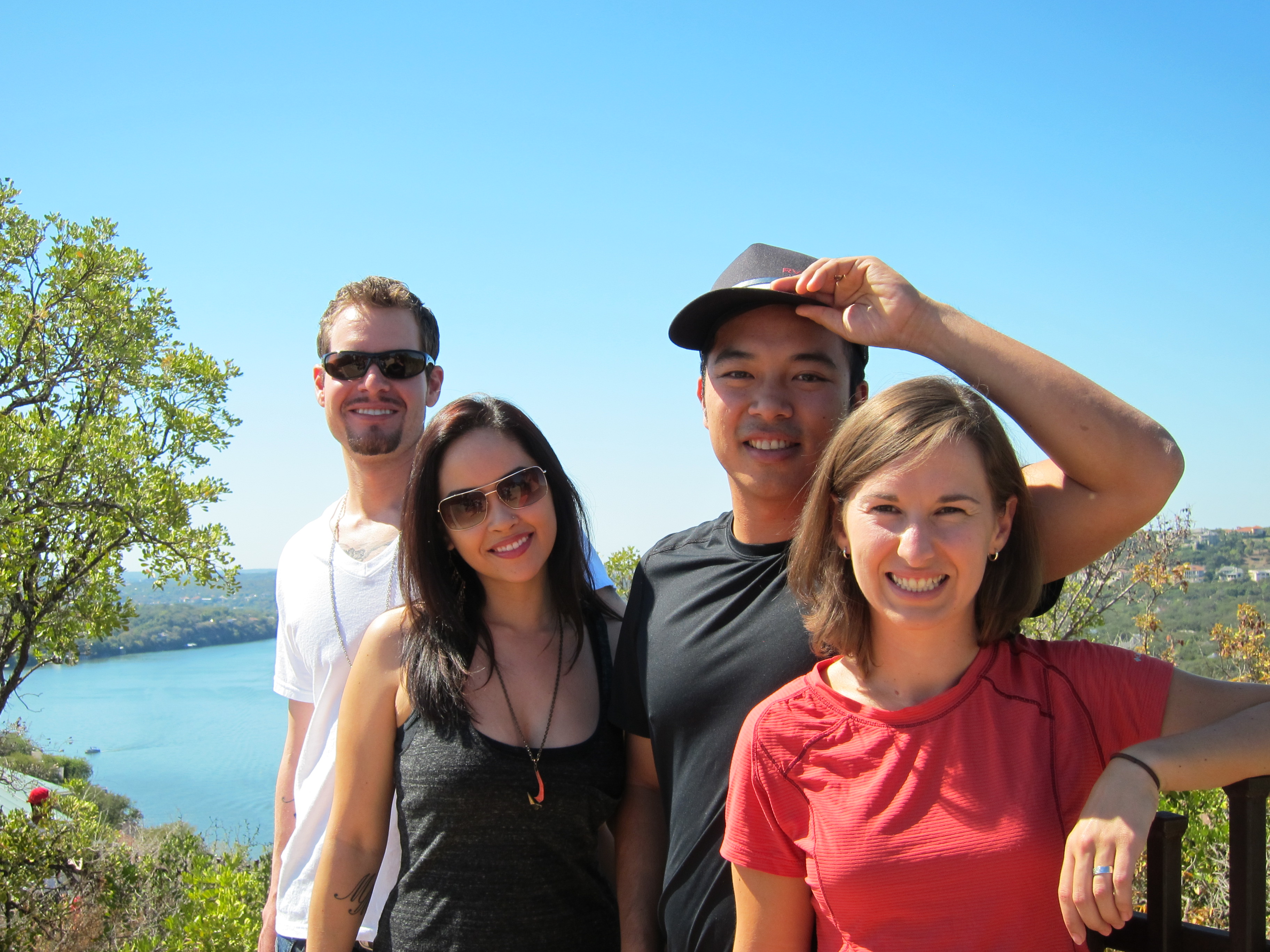
Lessons Learned:
» Live life to the fullest. Exercise a lot. Enjoy and celebrate your family. There’s a lot you can do in your later years of life.
» Love is tough (but worth it). My great Aunt recently lost her husband and it has broken my heart, made me realize how thankful I am for Michelle but how tough it will be when the chapter of sharing life together will end.
» The United States is an amazingly big and diverse place. Texas is big. Texas is…..interesting (let’s leave it at that).
» Thankful for friends who even though I haven’t seen in a decade, are the same amazing friends I’ve always known.
OCTOBER
» Finished work travel to TX by visiting Houston (Michelle was able to join me for this part)
» Traveled to Chicago to visit Michelle’s brother and sister in-law (Michelle’s parents visited as well)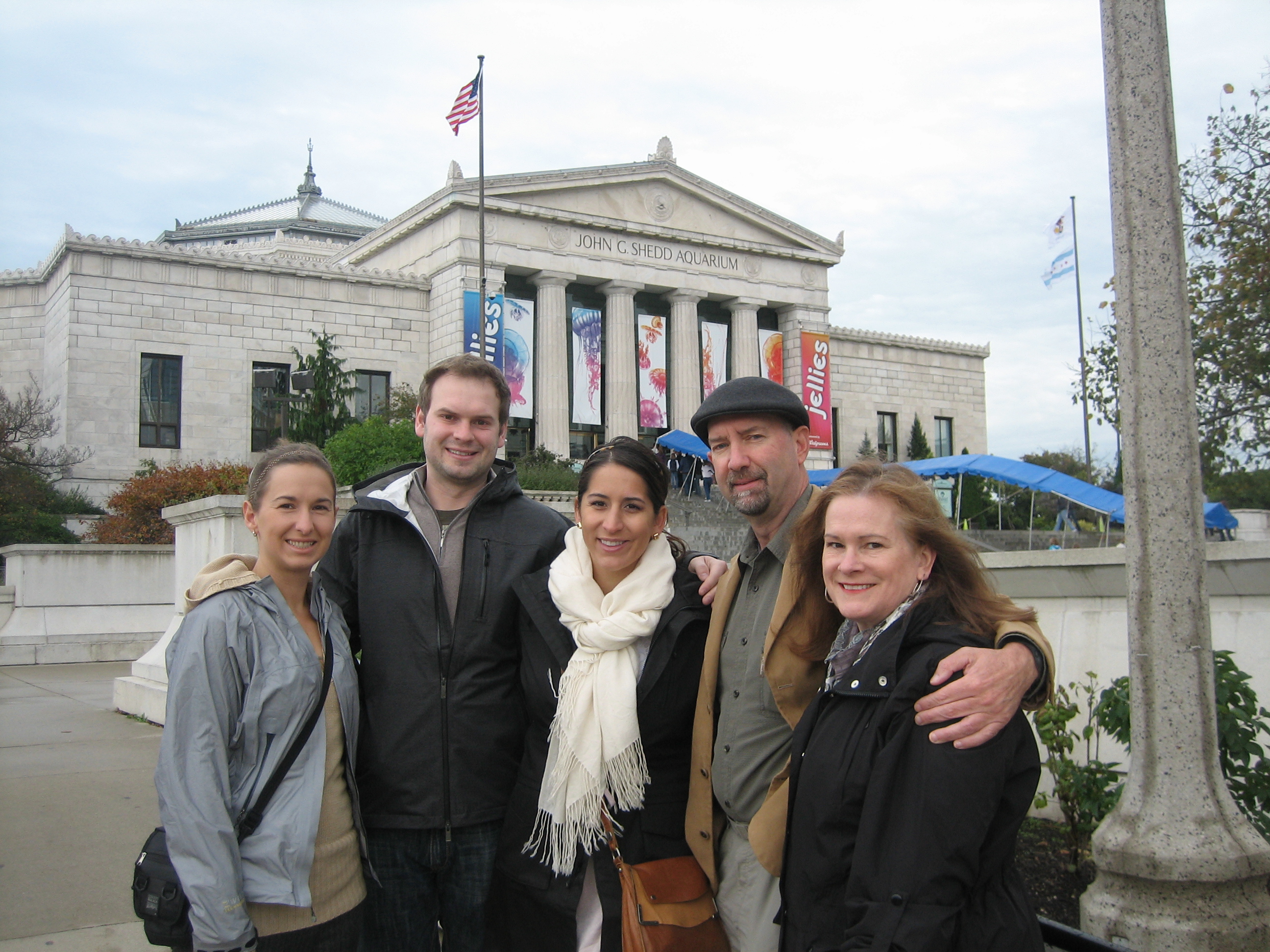
» During our trip to Chicago, we visited Indiana (and Notre Dame), Michigan (specifically a town called Holland), and Wisconsin (Lake Geneva) to knock off a couple more states in our goal to see all 50 states together.
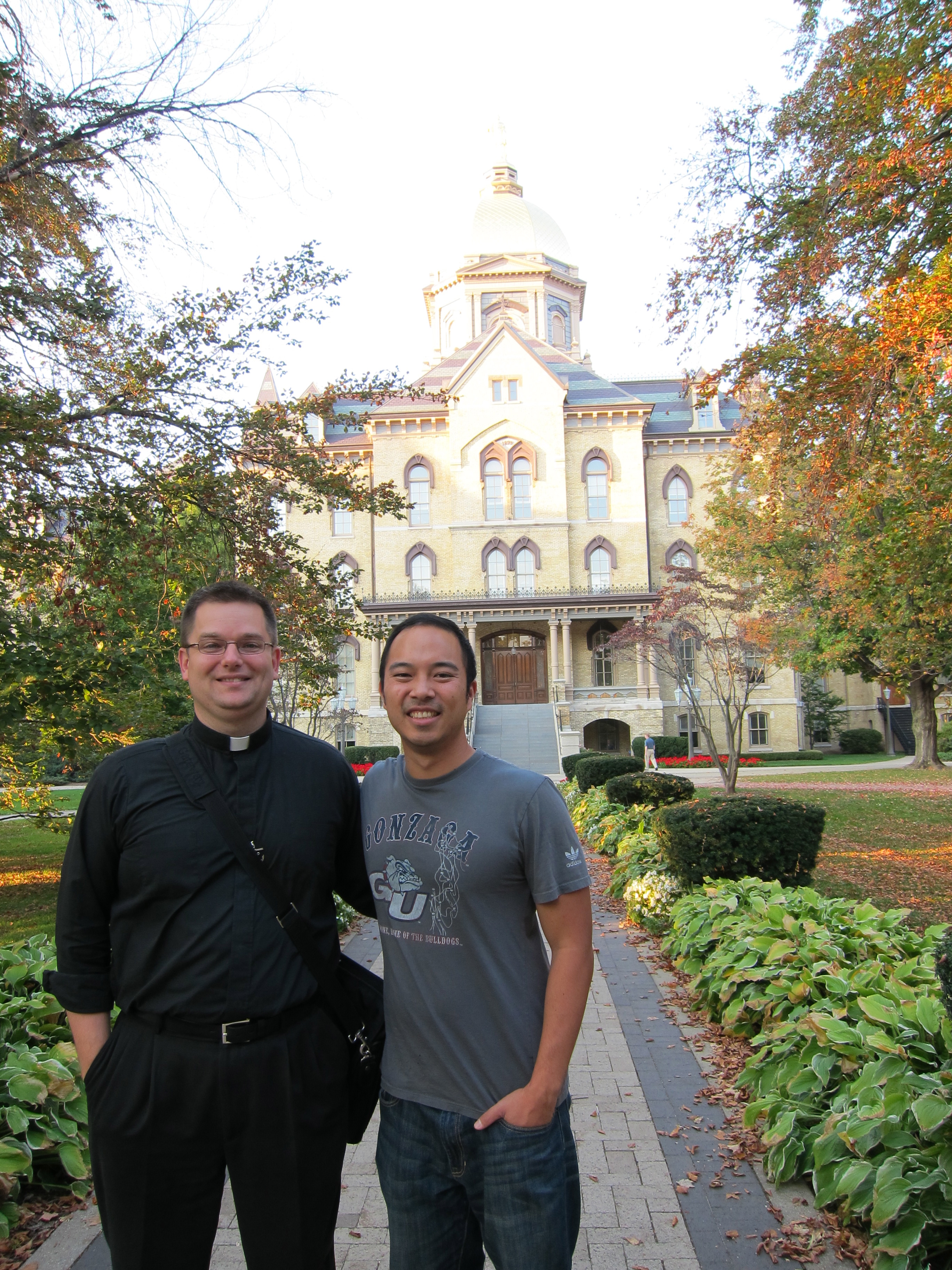
» Traveled back to Alaska for work
» Headed home to Hawaii to visit Family
Lessons Learned:
» The Hunger Games Series are really good (Michelle and I read all three books in a couple of days).
» Austin,TX > Houston, TX.
» Chicago, IL > Austin, TX (except in the winter). Therefore, Chicago > Houston.
» Notre Dame is nice, Holland Michigan is surprisingly nice, and Lake Geneva is expectedly nice (supposedly a “rich, 1% area”)
» Alaska is still wild and beautiful. *Special Note – If given the option to fly in a little plane or drive, I would suggest the drive. The little plane was quite shaky.
» 4 plane rides within a 24 hour period is no fun, however, flying in an airplane still AMAZES me.
Share this:

When Helping Hurts: What To Do When

My last post on this topic focused on the North American tendency to define poverty and the alleviation of poverty in materialistic terms when, in actuality, poverty encompasses much more. From a faith perspective, poverty is not being able to be all that God has intended us to be- glorifying Him through right relationship with God, ourselves, others, and creation. Having enough material things is just a small part of that equation.
Am I saying that giving material donations is bad? It is only appropriate in certain situations, and too often we North Americans over-emphasize materialism in trying to relieve poverty. In some cases, building someone a house, serving someone free food, or gifting money can do more (unintended) harm in the long run. Because poverty alleviation is not just about having enough, doing the “right thing” at the wrong time will negatively affect those core relationships the poor have with themselves, God, others, and creation. Are the poor better connected to their community, better stewards of their resources, or feeling capable and empowered if they have to stand by and watch Americans build them a house? To better understand what to do and when, the book When Helping Hurts: How to Alleviate Poverty Without Hurting the Poor . . . and Yourself
Relief, Rehabilitation, and Development

Relief: Emergency, temporary aid to reduce immediate suffering resulting from a natural or man-made crisis. Often materialistic and often over-diagnosed. Relief “stops the bleeding” for someone who cannot help themselves at the time.
Rehabilitation: Restoration to pre-crisis state and minimizing future vulnerabilities. Immediately after the “bleeding stops,” outside help works with victims in their own recovery.
Development: Process of ongoing change moving people closer to being in right relationship with themselves, others, God, and nature. Restoring individual identity and vocation, household, community institutions, and societal laws. Empowering local people. (pg. 104-5)
Who should be receiving relief and material aid? The book provides several guidelines for when it is appropriate to provide relief:
1) There are serious, negative consequences if you fail to provide immediate help. There is no time for the person or community to take action on their own behalf.
2) The person or community is in crisis through no fault of their own. (Our role is not to punish someone for their mistakes but to allow people to learn from them when necessary.)
3) The person or community has no way to help themselves (otherwise, their capacity to steward their own resources and abilities will be undermined by your help). (pg. 106)
People who require relief efforts are: “the severely disabled; some of the elderly; very young, orphaned children; the mentally ill homeless population; and victims of a natural disaster.” For everyone else for whom the “bleeding has stopped, and they are not destitute… rehabilitation or development- not relief- is the appropriate way of helping such people” (pg. 109).
Chalmers Center for Economic Development at Covenant College
Other “When Helping Hurts” series posts: Intro: Caring, Intro: God and Poverty, Context Is Critical, Hung Up On Material, What To Do When, How To Be Positively Helpful (Part 1), How To Be Positively Helpful (Part 2)
Share this:

When Helping Hurts: Hung Up on Material

Alright, today I’m talking about a topic that I hadn’t really considered in this particular way until I started my “independent study” so I want to give lots of credit to the book When Helping Hurts: How to Alleviate Poverty Without Hurting the Poor . . . and Yourself
I remember when we were preparing for our Spring Break trip to the Dominican Republic- my first ever intentional trip to a developing country- and one of the college leaders of our church said, “You know, we’re not going on this trip to build the Dominicans new garages so they can keep more stuff in storage.” His point was that we’re not supposed to be making people from developing countries look more like those of us in the Western world. Of course, we’re not going to build a poor person a garage, I thought. But maybe we’ll build them a better house. Now, I’m not sure that’s the best idea either. I don’t think I realized how deeply the American culture of materialism affected my views about poverty.
According to the book When Helping Hurts

Here’s an alternative definition of poverty: “Poverty is a result of relationships that do not work, that are not just, that are not for life, that are not harmonious or enjoyable,” according to Bryant Miller in Walking with the Poor, pg. 86. The poor describe their poverty in psychological and social terms, in relational terms, not merely materialistic. Poverty is not just about what we do or do not have. Here’s where faith is at the center of the picture again. The When Helping Hurts book suggests that to be all that God created us to be, we need well-functioning relationships with:

- God
- self
- others
- creation
Broken or dysfunctional relationships in one or a combination of these categories constitutes poverty. Therefore, true poverty alleviation is holistic and will work at restoring relationships with God (spiritual intimacy), self (humility, self-esteem), others (community), and creation (stewardship).
There is also the sense that in some of these relationships, someone we consider “poor” is likely much richer than we are- in relation to God or to others, for example. Too often we North Americans tend to serve with a “God Complex.” I don’t like to think that I’m better than someone or that I know everything there is to know, but I am motivated to help the poor in part because I want to feel worthwhile, accomplished, significant- isn’t that trying to be like God? The God Complex is considered a “poverty of being,” or an unhealthy relationship to yourself. “One of the many problems in many poverty alleviation efforts is that their design and implementation exacerbates the poverty of being of the economically rich- their god-complexes- and the poverty of being of the economically poor- their feelings of inferiority and shame” (pg. 65).
Instead of making sure poor people have more material things, true poverty alleviation will empower people to earn sufficient material things on their own. “The goal is to restore people to a full expression of humanness… to see people restored to being what God created them to be: people who understand that they are created in the image of God with the gifts, abilities, and capacity to make decisions and to effect change in the world around them; and people who steward their lives, communities, resources, and relationships in order to bring glory to God” (pg. 78, 81). What this means in practical terms for poverty relief will be the topic of upcoming posts.
Share this:

When Helping Hurts: Context is Critical


The photos above were taken in Haiti before the earthquake by members of the Haiti Foundation of Hope Vision Team in June 2009
“The U.S. people don’t know us enough. The first thing that Haitians need from the American people is for them to know our history better.”
Roseanne Auguste, community health worker with the Association for the Promotion of Integrated Family Health from What Haitians Want from Americans (And What They Don’t) compiled by Beverly Bell
This quote by a Haitian woman summarizes, for Haiti, was is true in any situation where we are trying to serve people and improve their situation. How many times have we tried to “help” someone before we truly get to know them? Imagine trying to explain a problem to someone, only to have them jump in and tell you a solution that you know would never really work? Their intentions are good but they just don’t know you or the situation well enough. Imagine trying to describe your symptoms to a doctor, only to have them diagnose you with a simple ailment before going in depth into your complex medical history. By not understanding the full context, the doctor may gloss over critical symptoms in your past or other related illnesses that, when taken all together, would cause the doctor to prescribe a completely different remedy. I believe that in many cases, if we understood the context or the background of the people we want to help, we’d find ourselves helping in very different and more effective, responsible, positive (i.e. helpful) ways.


A peoples’ history, politics, and policies also make up their context and affect poverty in unique ways. I first saw this most fully during an immersion trip to Nicaragua (see video post here) with Witness for Peace and was then inspired to learn more about the background story in Haiti. I always thought history was kind of boring and to this day have trouble getting historical dates and names to stick in my mind. However, it became much more interesting once I discovered how the history of a country like Haiti explains much of why it is in such a sad state today and also helps inform ways to make improvements. If you didn’t know better, you might think that the state of Haiti today is because Haitians have just never managed to get their act together and that they’ve been tragically unlucky to be hit by a series of hurricanes and earthquakes. But if you search deeper, you’ll find much more. For example, Haitians actually defeated Napoleon’s troops to become the first independent, black republic in the world. Despite this great accomplishment, Haiti was consistently bullied by various countries of the Western world, including being forced to pay retribution to France for “lost property” (i.e. slaves) and, more recently, having a popularly elected president forced out of office by none other than the U.S. government. The lack of success in Haiti is not for lack of effort or capability. Western countries have throughout history interfered in Haitian affairs in countless, harmful ways. (More on this in another post.)
There is also the cultural context that must be understood. One of my favorite classes I’ve ever taken was Cross-Cultural Communication where we learned how we all hold unspoken cultural norms, or rules, that we are often unaware of but that help us interpret our interactions with others. Each culture has their own particular version of what is polite and what is rude, what behaviors communicate friendship, what is acceptable to do in certain circumstances and what is just not done. Some cultures require an elaborate series of greetings and questions before engaging in a discussion with someone. Not doing so would come off as disrespectful. In some cultures it is better to act agreeably and then not follow through than to tell another person directly that something can’t or shouldn’t be done. For them, “saving face” always takes priority. Other cultures have taboos about which hand you use to eat, whether you cover your mouth when you yawn, or whether you should open a gift in front of the person who gave it. When taking that Cross-Cultural course, I came to realize that when it comes to cultural differences, oftentimes you don’t know what you don’t know. All the more reason to educate yourself as much as possible. Before going into a community to help, it’s important to understand these cultural norms in order to work effectively with people and also not offend them! Additionally, cultural differences can mean that solutions to problems may need to be adapted- or may not transfer at all- from one culture to the next. One community may hold different values or practice customs that would prevent a program from being as successful as it might be somewhere else.
Failing to understand the context where you are serving can be not only disrespectful, but your service can end up causing more harm than good. For mission trips abroad, this means doing your research on the history, current events, political ideologies, and cultural customs you will be encountering. It means listening to the opinions and wisdom of local people and approaching the community with humility. Our Cross-Cultural Communication class described it as “inhaling more than you exhale.” Be mindful that you “don’t know what you don’t know” and you must do a lot of learning before you can do any teaching. While you may have a certain kind of expertise you bring to your service, you must also recognize that the people who belong to the community have their own expertise built on years and years of experience in that place. (Also remember that the same people will be there for years and years to come, and you may not, so they must be integral to your service if it’s to be sustainable.)
A reminder: Please provide feedback, questions, and suggestions for this post. Thanks!
Other “When Helping Hurts” series posts: Intro: Caring, Intro: God and Poverty, Context Is Critical, Hung Up On Material, What To Do When, How To Be Positively Helpful (Part 1), How To Be Positively Helpful (Part 2)
Share this:

Redwoods and the Oregon Coast
Thanks for tuning in to our adventures! This is the final video blog post of our month-long road trip. After Yosemite, we had one of our longer driving days to get to the Redwoods. We decided to spend only one night in the Redwoods area so we could meet up with my (Michelle’s) family. It has been family tradition since the 1950’s for my Mom’s side to camp at Honeyman State Park in Florence, Oregon. I grew up going there every summer with all the cousins but now many of them have gone separate ways. So this time was a very small gathering of the clan. As you’ll see in the video, Jedd was very excited to end the trip catching two fish back to back since his other catches the week beforehand were too small to keep.
We are now in the Portland and Salem areas enjoying more time with family. What does the rest of the summer hold for us? Well, we’ve been pretty successful lining up house-sitting and work-exchange-for-rent (but we can always do more- let us know), so we continue to be nomadic. We’re excited to do some more traveling as well, with a trip to celebrate Mère’s (Michelle’s grandma’s) 90th birthday in New Orleans and then help Jedd’s great aunt get ready to move from Florida in September. Jedd is working about 3/4 time with Relevant Studios while I am basically doing odd jobs around other people’s houses. We expect to have more information from Peace Corps at the end of the summer, whether that be a final placement or more waiting.
See more from our road trip here (videos included):
Epic Road Trip Day One: 4 States in 2 Days
Yellowstone Jackson Exploring Utah Bryce and Zion
Grand Canyon Las Vegas National Park
Sequoia and King’s Canyon Yosemite!
A Snapshot of Our Trip So Far
Away We Go! Our National Parks Road Trip Itinerary
Share this:
Yosemite!
Many say Yosemite is one of the most beautiful places in the country, so we decided to spend five nights there. After an arduous hike, the view from the top of Yosemite Falls was well worth the climb. Another hike took us to an unforgettable waterfall at Hetch Hetchy Resevoir in a section of the park that has fewer visitors and allowed us to escape the weekend crowds. One of Jedd’s college friends, Tyler, was able to fly out to meet us to experience this leg of the epic road trip together. We’re appreciative that he made the effort to join us! As in many of the other parks, we also took advantage of the Ranger programs, which always provides deeper insight to our experience (and usually good laughs from the cute things enthusiastic children contribute to the talks).
See more from our road trip here (videos included):
Epic Road Trip Day One: 4 States in 2 Days
Yellowstone Jackson Exploring Utah Bryce and Zion
Grand Canyon Las Vegas National Park
Sequoia and King’s Canyon Redwoods and the Oregon Coast
A Snapshot of Our Trip So Far
Away We Go! Our National Parks Road Trip Itinerary
Share this:
Sequoia and King’s Canyon
We had a great three nights camping in King’s Canyon where we could explore the canyon, rivers, lakes, huge trees, neighboring Sequoia National Park, and- of course- encounter more wildlife! The highlight of this part of the road trip was definitely the bear on our hiking trail.
See more from our road trip here (videos included):
Epic Road Trip Day One: 4 States in 2 Days
Yellowstone Jackson Exploring Utah Bryce and Zion
Grand Canyon Las Vegas National Park
Yosemite! Redwoods and the Oregon Coast
A Snapshot of Our Trip So Far
Away We Go! Our National Parks Road Trip Itinerary
Share this:
Las Vegas National Park
Though not a National Park and not on our list of places to see, Las Vegas was on the way from Grand Canyon to Sequoia. And so we spent the weekend there. Fortunately, Michelle’s parents and brother, Tyler, were able to join us as well.
If we weren’t already, we are now officially big Cirque du Soleil fans. We were able to see both “O” (the water show) and “Mystere” while in Vegas, and they were absolutely spectacular. We were in awe of all the crazy things human beings are able to do and of the intricate, creative thought that went into every moment on stage.
We likened the city of Las Vegas to a grown up’s Disneyland, a comparison that has no doubt been made before. It’s a land where reality is set aside for the time being, buildings are constructed with no other limit than imagination, and each resort plays its theme out down to the smallest detail.
But it’s not all fun and games. On the streets, a silent story was being told that deeply saddened us. Most people are probably familiar with what happens on the streets of Vegas: the distribution of pornographic prostitution flyers. Many people laugh these off or simply ignore them. But who is distributing these flyers? Is it the pimps? People who want to promote prostitution? I don’t think so. It was people desperate to support their families. People who would have exhausted any other alternative for making a clean living. People who had to set aside their values and moral beliefs in order to scrape by. Can you imagine what kind of situation would cause a person to make this choice? More often than not, it’s someone of hispanic background behind those flyers. Immigrants who have to be paid under the table can be taken advantage of by “employers” because, without papers, they can’t go to the authorities to report unfair wages or other abuses. Behind their stoic faces and the snap snap of the flyers between their fingers, dutifully pushing a flyer at each male pedestrian who passes by, you can start to see that there is more to their story. Something that we push behind facades because it’s too ugly or sad to bear. You can tell that behind all the glitter and lights, something is not right in Vegas. There is plenty to distract us from thinking about it- that’s what Vegas is about: distraction. But it’s definitely there in the dark corners, and we’re all at least a little relieved that someone is covering it up so we don’t have to think about it. For the time being.
See more from our road trip here (videos included):
Epic Road Trip Day One: 4 States in 2 Days
Yellowstone Jackson Exploring Utah
Bryce and Zion Grand Canyon
Sequoia and King’s Canyon Yosemite!
Redwoods and the Oregon Coast
A Snapshot of Our Trip So Far
Away We Go! Our National Parks Road Trip Itinerary
Share this:
Grand Canyon
While, yes, the Grand Canyon is in fact very grand, it doesn’t quite stand up to the footage we’ve gotten from some of the other places on our trip. Highlights of our stay at the North Rim included scoring a sweet camping spot near the rim and encountering some interesting wildlife while out on our hike. Can anyone identify the large reptile on the trail?
I’m beginning to work on more videos again now that we are back in town, so look for more in the next few days!
See more from our road trip here (videos included):
Epic Road Trip Day One: 4 States in 2 Days
Yellowstone Jackson Exploring Utah
Bryce and Zion Las Vegas National Park
Sequoia and King’s Canyon Yosemite!
Redwoods and the Oregon Coast
A Snapshot of Our Trip So Far
Away We Go! Our National Parks Road Trip Itinerary
 Simply Intentional