Fried potato. Garlic mayo sauce. Cheddar cheese powder. Definitely not part of the fast.
Imagine if today you challenged yourself to completely change your routine regarding food. Today was going to be a start of a 30-day period where you only ate certain things and limited how much you ate. No more sweets or desserts. No alcohol or soda. Nothing fried or processed. No meat. No dairy.
Would you do this challenge intentionally? Why would someone do this intentionally? Could you do it? Continue reading “Let’s Go Fast”→
It talks about the misconception some have about our recent travels, seeing them as vacations. In reality, travel has become part of work and more importantly, part of our day-to-day lives.
For the past two weeks, we’ve been in Honolulu, Hawaii visiting Jedd’s family. A couple times throughout this trip, people have referred to our stay as a “vacation.” The same thing happened on our three-week visit to Jamaica last month.
A simple Google image search for Black Friday gave me this
I use to love this time of year.
But over the past 5 years or so, the warm, joyous feelings of celebrating this season with family and friends, has slowly been invaded by consumerism, chaos, and comparison.
We need to be reminded that there was a time when Black Friday, Cyber Monday, and now pre-Black Friday (a.k.a. Thanksgiving Sales) didn’t exist. But the Black Friday craziness that exists today didn’t happen overnight, it took time. The weekend after Thanksgiving has traditionally been a long holiday weekend that was supposed to be a break for all (those working, going to school, etc…). Businesses and corporations (let’s call them The Execs) saw this as an excellent time to promote shopping. “Get all your presents now before Christmas.” The Execs knew though, that it would take a little bit of encouragement, some sort of bait to lure people to their stores, to give up time with family and friends.
Though post-Thanksgiving was already a profitable weekend, the Execs wanted more. They knew that all they had to do was to brand it, give it a name, make it an actual event. They called it Black Friday. They offered bigger discounts. They created a limited, too-good-to-be-true feast that people couldn’t resist.
We ate it up.
According to estimates, the Black Friday Weekend sales phenomenon will bring in an estimated $36 billion dollars this year alone. $36. Billion.
And the main message? “Save money.”
I confess. I used to be a supporter of the Black Friday movement. I’ve waited in line for sales and deals. There was a time I actually believed that when I bought something on sale, I was saving money. It all changed when a friend challenged me with the following statement:
“Spending money, no matter how much money you are saving from a sale, is still spending money.”
More often than not, a sale makes us buy something we wouldn’t have bought otherwise. To truly save money, we have to refrain from spending on things we don’t really need.
Ironically, the most shocking and scary thing about Black Friday isn’t the obsessive and obscene amounts of money we are spending on stuff, but the damage and cost this sales event has on relationships.
We are creating and supporting a culture that says consumerism is more important than family and friends.
First, it started with the controversy of a few major stores opening on Thanksgiving day late at night, to ease anyone’s concerns. Each year, however, stores open earlier and earlier on Thanksgiving. This year, it’s big news as to which stores will be open and those that refuse to open on Thanksgiving. With issues like Ferguson, ebola, wars, etc… going on in our world, I’m still amazed how pervasive the Black Friday weekend is in the media.
One thing I would love to ask the Execs and supporters of Black Friday: Does this make our lives and our world better? But maybe the question more important is: What are we doing to make the world better?
Is saving money by spending money on sales really saving money? And more importantly, what is the true cost of excessive consumerism?
Regardless of how you choose to spend your time (or money) this weekend, we hope that you and your loved ones find time together and ways to reflect how much you value and cherish these special relationships.
Happy Thanksgiving.
-J
Ps. This is an awesome video about all of that so-called important, must-have stuff.
We recently took a quick trip up to Jedd’s alma mater where he spoke about Peace Corps on an alumni panel for students interested in volunteer service after graduation. It gave us the opportunity to meet up with a number of people from Jedd’s college days. Over breakfast with one of Jedd’s former mentors at PLU, we had a great discussion about what we’re doing (or not doing) with our lives.
We had found ourselves losing enthusiasm and struggling in the absence of a real focus or direction for our lives. Thankfully, he reminded us why we chose our particular way of life in the first place and that choosing our own path naturally comes with its own set of challenges, including uncertainty. We left very grateful for his insights and re-motivated to carry on.
Sometimes when I read a book, I wish I had the power to make it required reading for a certain population. This is one of those books, and the chosen population is: America.
When my friend shared 7: An Experimental Mutiny Against Excess with me, I could see why she thought I’d be interested. But for some reason, I put off reading it. It sounded like work. Was I ever wrong. Now that I’ve finished the last page, I’m ready to read it again. That never happens.
There is something about the way this Texas-pastor’s-wife writes that is both hilarious and inspirational. Author, Jen Hatmaker, is witty, authentic, and bold as she takes you and her family along on a 7-month “experimental mutiny against excess.”
About the 7 Experiment
For one month each, Jen and her young family of five creatively fasted from: Food, Clothes, Possessions, Media, Waste, Spending, and Stress. For example, in month one they could only eat 7 foods (spinach, sweet potatoes, wheat bread, eggs, avocados, apples, and chicken). Month two, she kept a rotation of only 7 items of clothing. Month three, they gave away 7 things from their home every day. For Waste, they recycled everything possible and started eating unpackaged goods from their new backyard garden. Spending involved limiting their purchases to only 7 locations for the month; and Stress month led them to take 7 daily pauses for prayer and start practicing Sabbath.
In each chapter, I literally laughed out loud. Then I’d turn the page and become either passionately fired up or emotionally choked up. As she shares her struggles to “walk the walk,” you can’t help but feel a fire under your butt to make some changes of your own.
If anything, this book is a call for American Christians to wake up and shape up. But it’s also addressing the needs of our society at large, which applies to anyone. Our lives are getting excessive – more busy and more cluttered – but it’s not making us happier, and it’s affecting our ability to be Christ’s hands and feet among the suffering of our world.
This book is not about making you feel guilty. I wish I could explain, but you’ll just have to give it a try for yourself. In the meantime, here’s a quick promo video for a corresponding Bible study where the author gives a brief overview of the 7 Project:
Recently the hardest question to answer these days is: “What do you do for work?”
When people ask us this question I think they are trying to understand two fundamental things:
1. How are you supporting yourself financially to do the things you love (ie. travel) and
2. What exactly do you do?
Explaining to people where we currently live seems simpler to answer (in case you are wondering: it’s with family in Oregon when we are not house-sitting or traveling). Still complicated, but simpler.
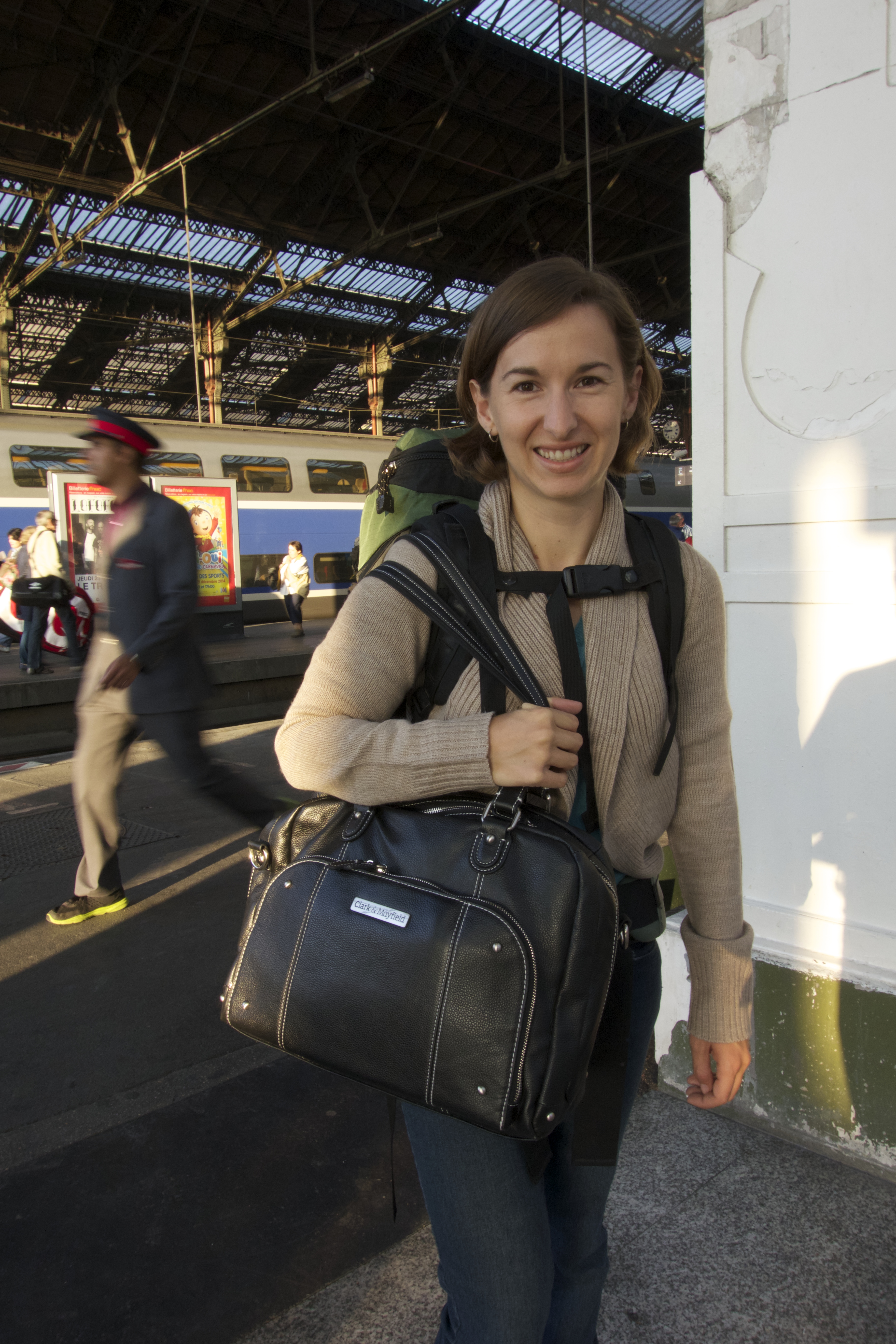
Train station in France
Living this unconventional,”digital nomad” lifestyle is difficult to explain. It’s based on core values and principles of wanting to live a life that is simple, intentional, relationship-based, and flexible (regarding time). Whenever we are faced with any decisions about what we want to do with our lives, we use these principles to guide us.
Whereas someone with a more conventional life could say, “I live in __” and “I do ___ for a living” and that might not change for awhile, our lives are lived in a much faster, more fluid pace (which has it’s benefits and challenges). I just spoke to a good friend recently (whom we served with in the Peace Corps) and she told me, “Jedd, I couldn’t do what you guys are doing. I need to be in one place for awhile.” I get it.
Currently our unconventional lifestyle is a better fit for us in regards to where we are and what we want in life. Somedays we do think about having a more “settled” life. But for now, the benefits of travel, discovery, and experience outweigh security and predictability. However, we also realize that earning an income is a necessary part of life. Thanks to technology, the sharing economy, the support of family and friends, we are able to do a couple of things that help support us financially. How do we do it?
It can be broken down into two simple concepts: Expenses and Income.
Ideally you want fewer expenses and more income, and not the other way around (a concept I learned late in life, thanks to Michelle and maturity).
Expenses
We were hanging out with some friends recently (a couple) where one of them said, “I saved a lot of money from this 50% off sale.” Their significant other looked at them and said, “That’s not saving. That’s spending.”
I laughed at this conversation because I would have been the one thinking that I had saved a lot of money. Michelle has the other perspective where money spent is not money saved.
The truth is that life does have a cost, whether we like it or not. There will always be expenses. But one of the best practices I have learned is how to lower and cut out unnecessary expenses. This is important because the more expenses you have, the more income you need to make. When expenses start piling up, it creates a lot of stress and pressure. More importantly, it takes away flexibility and freedom. You may not be able to leave a job that you don’t like. You might not be able to travel as often as you’d like. And what I found was that I was spending more time at work than I was with Michelle.
Here are some of the ways (and I’m sure there are more things we can do) that have lowered or cut out our expenses:
ACTION
LEARNED
PROS
CONS
Sold Our Car
Use public transportation, borrow, rent
No gas, insurance payments, repairs, etc.
Not having one when you really need it?
Housesitting
Living from a suitcase, simplicity
No lease, housing payments, utility bills. Ability to travel and live in different places (rent free)
Constantly on the road, nothing to call your own, always looking for the next opportunity.
Travel Hacking
Using miles instead of cash to travel.
Affordable travel.
Takes work to keep track of. Must be responsible with credit cards.
Help Exchange
Finding mutually beneficial arrangements.
Work for room and board. Additional benefits of networking, spending time with friends, knowledge and experience in different trades or skills, exploring new places for cheap.
Experience depends on your host and if it’s a good fit for both parties.
Family Phone Plans
Cheaper than individual plans.
Must remember to write a check to the person in charge of the bill.
Living Simply
Life without excess stuff.
No furniture to purchase or upkeep, less to manage when moving from place to place, easy to find things because there’s less to look through, etc.
Affordable Shopping
Shopping at thrift stores
Huge savings on things like clothes.
Takes more effort and time to find the things you want or need.
Dining Out Less
Cook on our own.
Huge savings on food. Much more fun and rewarding.
Takes effort, planning, and time to cook.
Remember, it would be nice to eliminate all expenses, but we also know that it’s difficult. It’s also important to note that lowering or cutting out expenses does not mean cutting out value or quality. Eliminating unnecessary costs and expenses should be liberating and not a hinderance. It’s also important for everyone to find the right balance for their own lives. Owning a home or a car isn’t a bad thing. Please let us know if you have additional suggestions on how we can lower or cut more of our expenses.
Visiting friends in Boston. #jumpingjedd
Income
Before we left the Peace Corps, Michelle and I did some forecasting regarding our first year back. What did we want to do in that first year? Did we want to travel? Where? How long? Then came the big question, how much would it cost? Additionally, when we weren’t traveling, how much would things cost regarding our monthly expenses? Food? Student loan payments? Phone and internet? We came up with some rough estimates and determined what we would need to make in that year between the two of us to live the lives we wanted. If we didn’t earn enough income, we’d have to tap into savings. Anything extra (the dream) would go into savings and retirement. This is how we determine whether or not the life we want to live is sustainable or not. We are trying it out until the system fails. If we feel that we are not earning enough income to meet our expenses with our unconventional living, then we’ll start to consider more conventional means.
It’s important to note that because we are already trying to live simply with minimal expenses, our income goal is a lot lower than most people. It’s what we think is doable and comfortable for us. This is not the same for everyone. As of right now, here is how we earn income:
J&M Consulting Michelle and I started a business as soon as we got back from the Peace Corps. We serve small businesses by providing a wide range of online services that include but are not limited to: social media management, contracting online services, website development, brand and identity development, customer service/client management services, and website management. The key aspect of all of these services is that we can do them from anywhere in the world that has acceptable internet. Currently we have 6 clients from the west coast to the east coast. As a startup, we are still focusing our services and which clients we can serve best, but it’s been going well so far. This is our business website: J&M Consulting
Odd Jobs Every now and then people ask us to help them with some sort of project- farming, yard work, housesitting, computer trouble-shooting, etc.. Most of the time we do these things without any expectation of payment but sometimes people do give us something in exchange.
Just like the expenses section, we of course would be more than happy for any suggestions regarding ways we can increase our income (without compromising our values and principles).
—
Hope this gives you a better sense of what it is that we are doing for the time being and how we try to live the life that we want. As always, we’d love to hear from you. Please feel free to leave any thoughts, comments, or suggestions below.
Though we’ve actually been in business for several months now (some of you may or may not have known that) and have several clients, we wanted to officially introduce our new company:
special thank you to Becca at RSJ Creative for our awesome identity
A Conventional Solution for Unconventional Living
A lot of people have asked us how we afford to live unconventionally. “You have to make some sort of income, right?” Yes. One of the things we discussed prior to returning from Peace Corps was the idea of starting our own company, one where our services could be done from a computer connected to the internet, to allow us the most flexibility and mobility.
What Kind of Company?
Consulting was the best word we could think of that could hold all the ideas we had of services we could provide. It allows us to do a wide variety of things, which is what we wanted. We don’t want to be known for one specific thing. We want people to hire us because of who we are, our skills and experiences, our values and passions. We are branding and marketing ourselves. We both believe that this is not a long-term career company, but a conventional way (having a job, so to speak) for the time being to live unconventionally. Since we also know that being very vague is not the best way to market ourselves, we narrowed it down to:
Project Management
Brand & Identity Development
Website Development
Marketing Strategy
Event Coordination
Michelle and I love being in charge of projects. We love to coordinate and implement programs. Projects can range from helping a small business owner get their business online to helping coordinate events and conventions. If there’s something we can’t do ourselves, we have a big network of talented folks who we can contract.
Social Media & Website Management Because of our experience in blogging and managing websites, we were contacted by a few people to help them with their social media accounts and manage their online presence (websites). We do everything from creating original content, uploading blog posts, engaging with an organization’s audience on facebook, etc.. We also have a lot of experience teaching people the basics of how to use online tools for themselves.
This is mutually beneficial for us and clients as we can do this kind of work anywhere we have internet.
There are tons of things we can also do that we didn’t list which is the beauty of why we started our own consulting company. The most important thing we want to get across, though, is that we want people to see that, as individuals and as a team, we can provide a lot. We have a range of professional and personal skills, and now, the time and flexibility to work on a wide range of projects.
We’d love if you would help us and connect us to people who might need our help. You might have a conversation with a family member, friend, or co-worker and be like, “I know a couple that could help you out.”
We still have available housesitting dates for late October to Thanksgiving for 2014 and beginning of 2015 from January to May. If you or someone you know needs housesitters, let us know. Here’s the link: https://jeddandmichelle.com/house-sitting/
Two simple living, trustworthy, very responsible, easy going, and respectful young adults (who also have been married for 6 years) are seeking housesitting opportunities for certain time periods in 2014-2015 to help homeowners that need short term house watching/loving care while they are out on vacation, sabbatical, adventures, etc…Want to learn more about us? Check out our “about” page here.
We can:
Care for pets, specifically well behaved cats and dogs (and or easy to maintain pets, sorry no livestock unless you teach us)
Travel anywhere (well, almost- if the gig is good)
Clean up after ourselves, and like ninjas make it look like we were never there
We would consider helping with:
Small household projects such as yardwork, painting, etc… (you would have to supply the tools and materials)
Short term (like a week) up to long term (a month or more)
We have essentially started our month-long road trip, and we’re off to a great start in the state of Washington!
Back in January, we announced to family and friends that we’d be continuing our “mid-life sabbatical” for the year. We actually created a SoKind Registry with some of the creative ways people could help us out (like lending us camping gear or recommending us for house-sitting gigs).
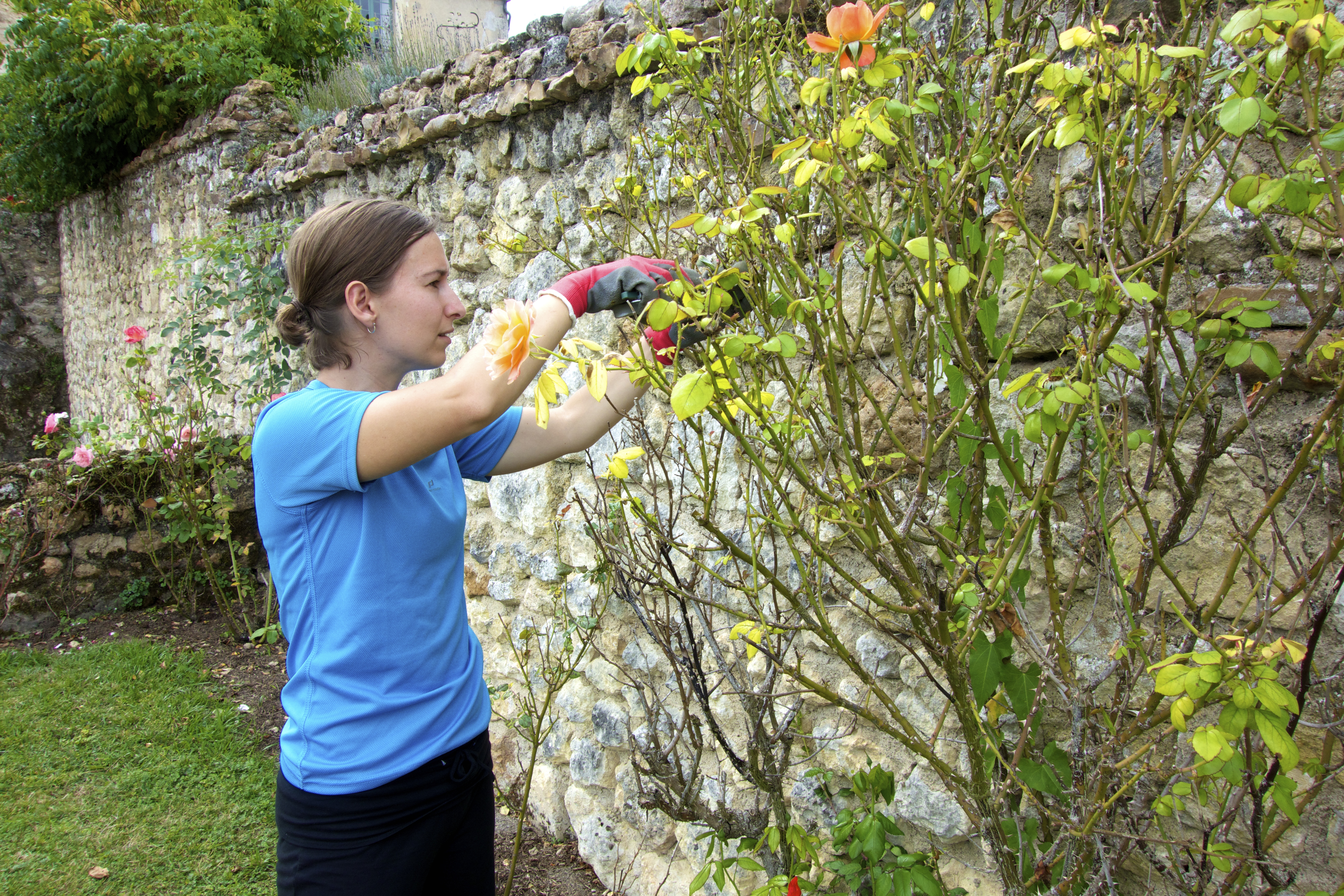
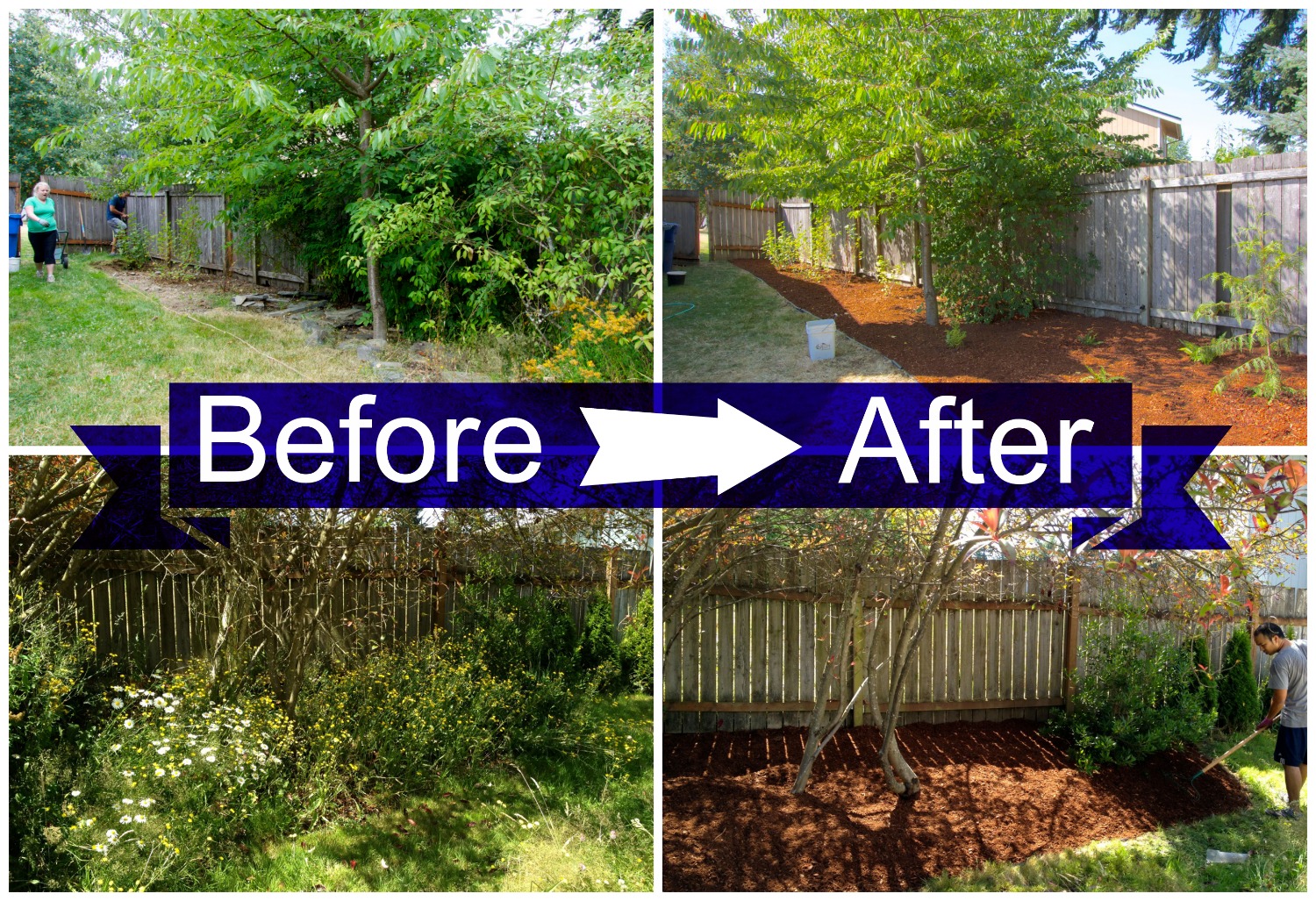
We were really excited when our friends, Stephanie and Jon, proposed an “unofficial help exchange.” Help Exchange is a network of hosts around the world who accept traveling helpers at their farms, B&B’s, or households for various periods of time in exchange for room and board and the chance to explore a new place. Our friends’ suggestion involved hosting us for a week and letting us borrow their camping gear in exchange for some help in their backyard. It’s an unofficial help exchange! And, since we also get to spend quality time with our friends, it’s a win-win-win!
Here’s some of the work we accomplished in just a few days
















 Simply Intentional